
When Solar Meets Electric Vehicles – An Energy Revolution in Your Garage
Imagine this: Your electric vehicle (EV) is fully charged every morning, yet your electricity bill doesn’t increase. This is no longer science fiction, but a reality for millions of EV owners worldwide. Thanks to the deep integration of solar technology and electric vehicles, “zero-cost mobility” is evolving from a distant ideal into a daily routine. EV charging no longer depends solely on the traditional power grid but harnesses solar energy – with excess electricity stored during off-peak hours to balance energy demand. The all-in-one solar-storage-charging system is making this vision a reality.
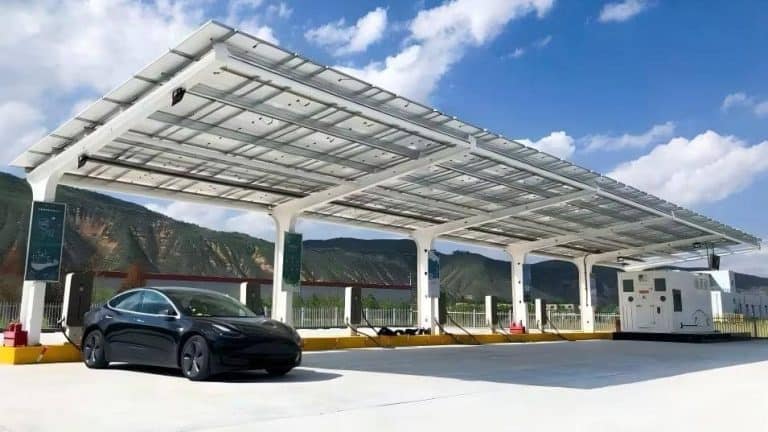
1.Practical Benefits: Solar Energy Storage for EV Charging
In a 2025 case study tracking nearly 500 European households with “solar + EV” setups, the results revealed:
– Average annual driving distance per household: 15,000 km
– Annual electricity cost for grid-only charging: €500–€800 (varies by country)
– After installing a 10kW solar system + 10kWh energy storage:
– Year 1: 75% reduction in charging costs
– Year 3: Achieved 100% “zero-cost” charging after system payback
– Total savings over 10 years: €8,000–€13,000 (including maintenance costs)
Regional Perspective: How Location Affects Benefits
– Sunny regions (e.g., Southern Europe):
Solar systems meet over 95% of EV charging needs | Payback period: 4–6 years
– Moderate-sunlight regions (e.g., Central Europe):
Solar systems meet 75–85% of EV charging needs | Payback period: 6–8 years
Even in less sunny areas, well-configured energy storage can enable over 80% self-sufficiency in EV charging.
2.What Is a True All-in-One Solar-Storage-Charging Solution?
In simple terms, an all-in-one solar-storage-charging system integrates solar power generation, energy storage, and EV charging into a single, cohesive energy ecosystem. Acting as a “super energy manager,” it seamlessly coordinates production, storage, and consumption. The system consists of four core modules:
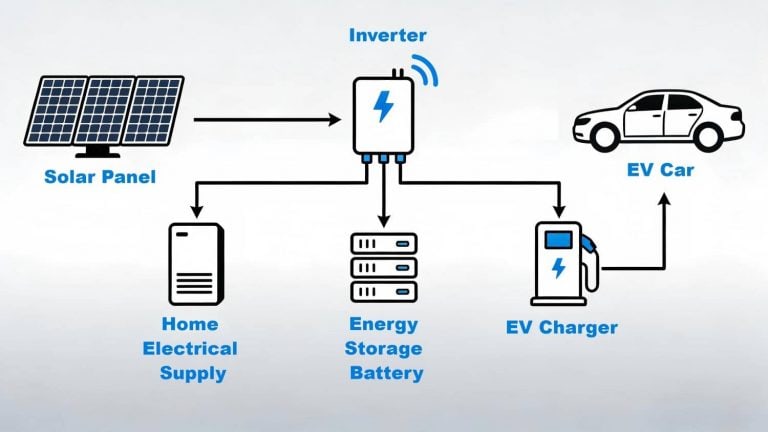
2.1 Solar Power Generation:
The energy source. Solar panels convert sunlight into electricity, supplying clean power to the system – like injecting continuous vitality into your energy supply.
2.2 Energy Storage System:
A large-scale power bank. It stores surplus electricity generated by solar panels, balancing the timing gap between energy production and consumption. Excess power from sunny daytime hours is stored and released at night or during peak demand.
2.3 Charging Infrastructure:
Provides power output for EVs and other devices, supporting both fast and slow charging modes. Whether you need a quick top-up or overnight charging, it adapts to diverse needs.
2.4 Energy Management System (EMS):
The “smart brain” of the setup. Using intelligent control technology, it precisely manages power generation, storage, and charging. The EMS monitors all modules in real time and adjusts strategies to ensure stable, efficient performance.
3.Why All-in-One Solar-Storage-Charging Systems Are Essential
Amid the global energy transition, traditional energy sources face mounting challenges, making renewable energy development imperative:
3.1 Limitations of Traditional Energy: Fossil fuels (coal, oil, natural gas) are non-renewable and finite. Their overuse causes significant environmental harm, including air pollution, greenhouse gas emissions, and acid rain. According to the International Energy Agency (IEA), global fossil fuel reserves are shrinking yearly – at current consumption rates, oil and gas may last only decades, while coal faces growing environmental restrictions.
3.2 The Rise of Renewable Energy: Clean, renewable sources like solar, wind, and hydro power are gaining prominence. Solar photovoltaic (PV) power, in particular, has accelerated rapidly in recent years. The International Renewable Energy Agency (IRENA) notes that solar PV costs have fallen consistently, now competing with traditional energy in many regions and becoming a cornerstone of the energy transition.
3.3 Challenges in EV Charging: Soaring EV sales are driving demand for charging infrastructure and more flexible charging models. Traditional grid-dependent charging strains power networks – especially during peak hours, risking overload and instability. It also suffers from inefficiency, high costs, and supply unreliability. For example, concentrated EV charging in urban areas during evening peaks can overwhelm local grids, leading to blackouts.
The all-in-one solar-storage-charging system addresses these issues by integrating generation, storage, and charging, enabling efficient energy use and on-site consumption. During sunny periods, solar power directly charges EVs or stores surplus energy; at night or during peaks, stored energy is used for charging, reducing grid reliance and easing pressure. Additionally, energy storage enables peak-shaving and valley-filling, lowering user costs, improving efficiency, and supporting sustainable energy development.
Infographic: Traditional Charging vs. Solar-Storage-Charging Integrated System
| Comparison Dimension | Traditional Charging | Solar-Storage-Charging Integrated System |
|---|---|---|
| Energy Source | Grid-dependent | Solar self-sufficiency + Grid supplementary |
| Charging Cost | Volatile electricity prices | Stable & low cost (near-zero in optimal conditions) |
| Carbon Footprint | Moderate | Extremely low |
| Grid Pressure | Increases load during peak hours | Intelligent dispatching to balance load |
4.Advantages of All-in-One Solar-Storage-Charging Systems
4.1 High-Efficiency Integration: Saves Space and Energy
A key advantage is the seamless integration of solar generation, storage, and charging – significantly reducing land use. In an era of scarce land resources, this is crucial. For instance, a commercial complex’s solar-storage-charging project used about 30% less land compared to separate installations, lowering construction costs and improving space efficiency.
In terms of energy use, the integrated design minimizes transmission losses. Solar power is stored or used for EV charging directly, avoiding grid transmission. Professional tests show 10–15% lower energy losses than with traditional decentralized systems, ensuring more efficient utilization.
4.2 Smart Energy Storage: Boosts Renewable Energy Use
Energy storage solves the intermittency and instability of solar power. Solar generation varies with weather and time – high during the day, low or zero at night or on cloudy days. Acting as a “power bank,” the system stores surplus energy when generation is high and releases it during shortages or high demand, enabling flexible time-shifting of electricity.
4.3 On-Site Generation: Relieves Grid Pressure
The “generate on-site, use on-site” model significantly cuts grid dependence and eases supply pressure. Traditional concentrated EV charging can overload grids during peaks, threatening stability. The solar-storage-charging system uses solar power for charging and stores surplus energy, achieving local consumption.
4.4 Peak-Shaving and Valley-Filling: Lowers Electricity Costs
Leveraging time-of-use (TOU) electricity pricing is a key cost-saving strategy. In many regions, electricity is cheaper during off-peak hours and more expensive during peaks. The system charges the storage battery during low-cost off-peak periods and discharges it to power EVs or other devices during high-cost peak times.
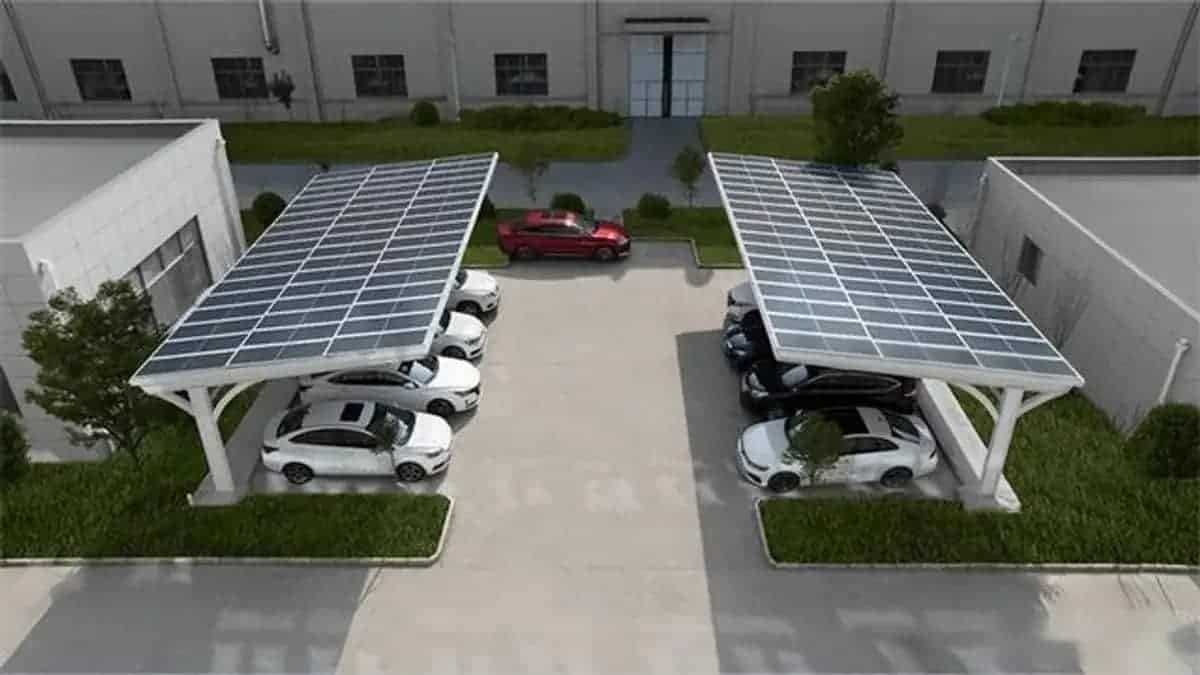
5.Answering EV Owners’ Core Questions
People Also Ask
Q1: “Can a solar system really fully charge my EV?”
A: Yes, but it depends on three factors: solar system size, storage capacity, and charging habits. A 6kW solar system typically generates 30 – 48 kWh on sunny days, meeting 50 – 80% of daily charging needs for most EVs (with 40 – 60 kWh battery capacity).
Q2: “What about nights and cloudy days?”
A: This is where energy storage proves its value. Surplus solar power stored during the day is used at night or on cloudy days. Intelligent management systems optimize charging and discharging based on weather forecasts and driving habits.
Q3: “How much does the system cost to install?”
A: The average investment in Europe ranges from €8,000 to €15,000 (solar + storage + charging unit), with government subsidies covering 30–50% in most countries. In our case study, 76% of users achieved full payback within 7 years.
Q4: “Is my roof suitable for solar panels?”
A: South-facing roofs are ideal, but east- or west-facing roofs can still achieve 75–90% of optimal generation efficiency. Modern solar panels also have significantly better shade tolerance.
Start Your Journey to Energy Independence
Our tracking shows that EV owners using all-in-one solar-storage-charging systems report higher satisfaction and are more likely to recommend EVs to others. By adopting this system, you’re not just changing how you drive – you’re helping transform global transportation energy.
Send Your inquiry
We will get in touch in 2 business day.
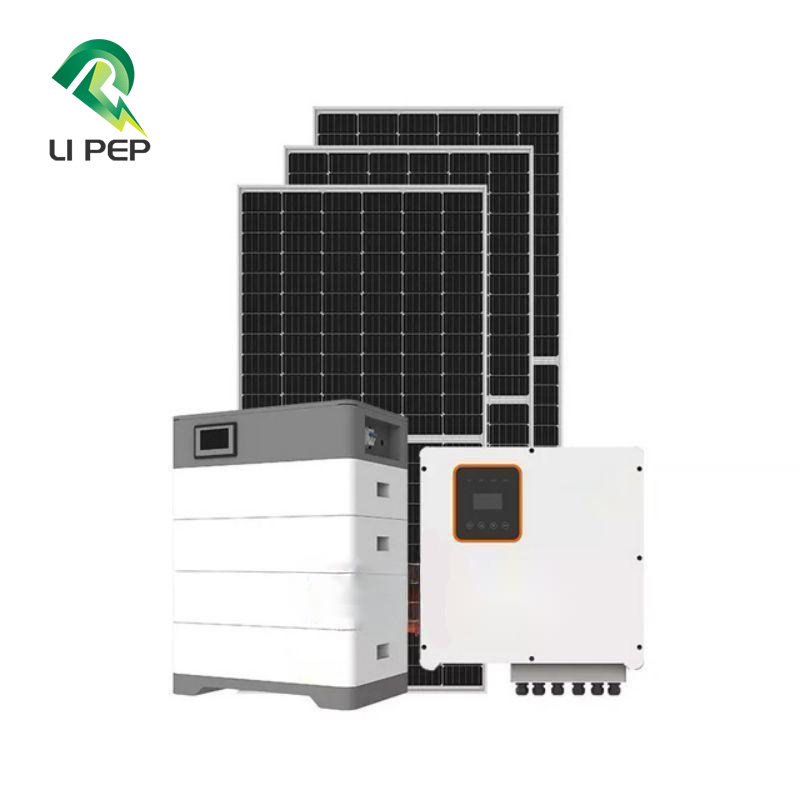
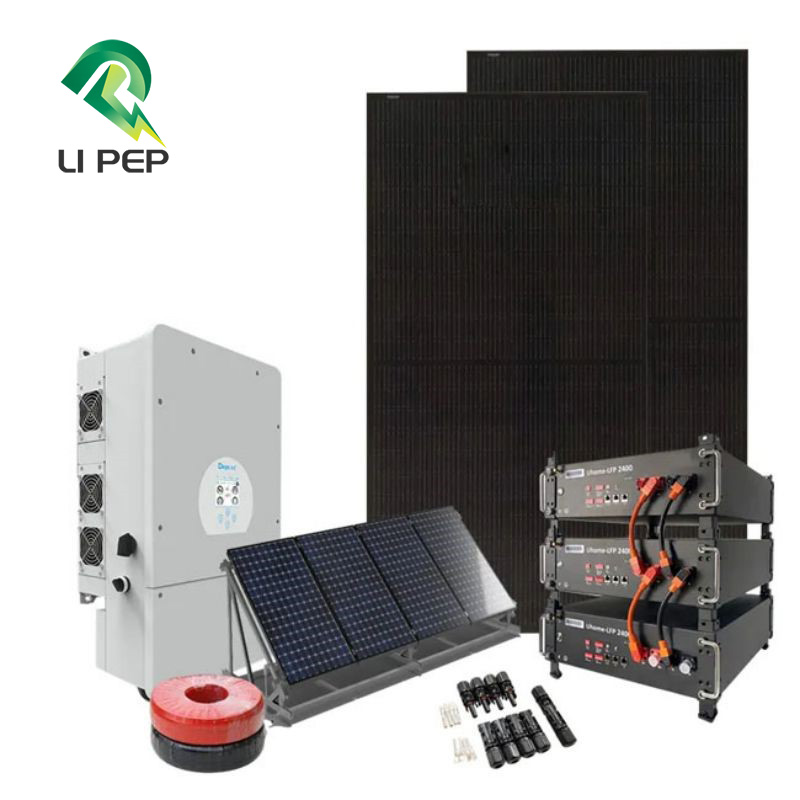
10kw/20kw/30kw Solar Power System With High Quality Solar Panel & Storage Battery & Inverter
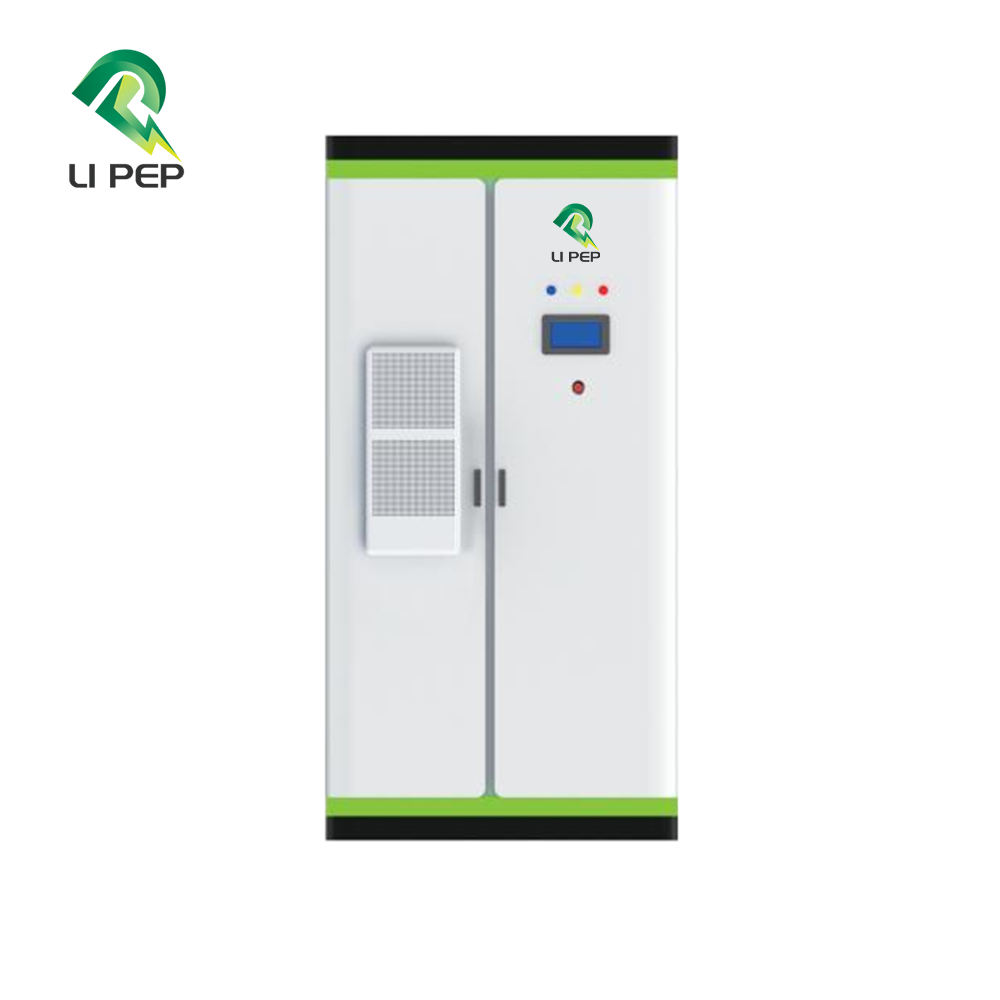
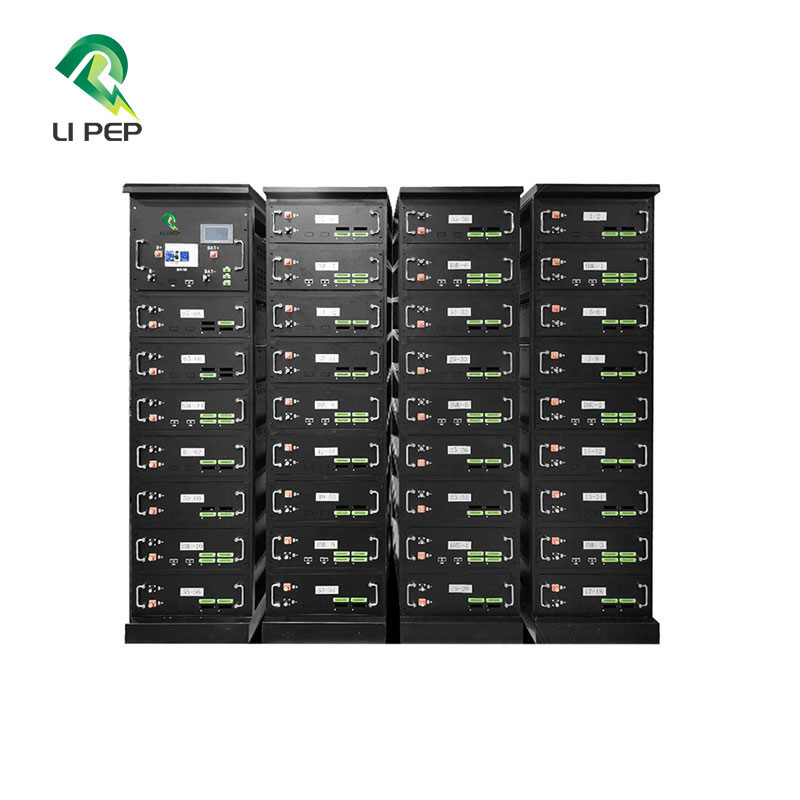
Cutomized 100kw/200kw Solar Power System With High Quality Solar Panel & Energy Storage System
LIPEP SERVICES
Customised Service
LIPEP has a wealth of experience and our technical team can provide you with a customised energy storage and solar system tailored to your needs.
Stable & Quick Supply
We have in-depth cooperation with manufacturers and can provide you with quality products quickly.
After-sales Service
We patiently listen to customers' needs and provide one-stop service from consultation, design to implementation and after-sales service.