
If you have been in the commercial or industrial energy storage market for the last five years, you know the drill: You either pay a premium for safety, or you accept lower prices at the risk of reliability.
For Small and Medium-sized Enterprises, this has always been a frustrating trade-off. High safety standards often inflate costs by 30-40%, making them unattainable for smaller businesses looking to scale.
However, recent advancements in manufacturing technology and battery chemistry are dismantling this old narrative.
In this guide, we will explore:
- Why traditional safety measures were expensive.
- New data from our recent market survey on what safety actually costs.
- A localized case study on how one European installer reduced costs without compromising safety.
- Ideal Solution for Battery Technology: Balancing cost-efficiency with thermal stability.
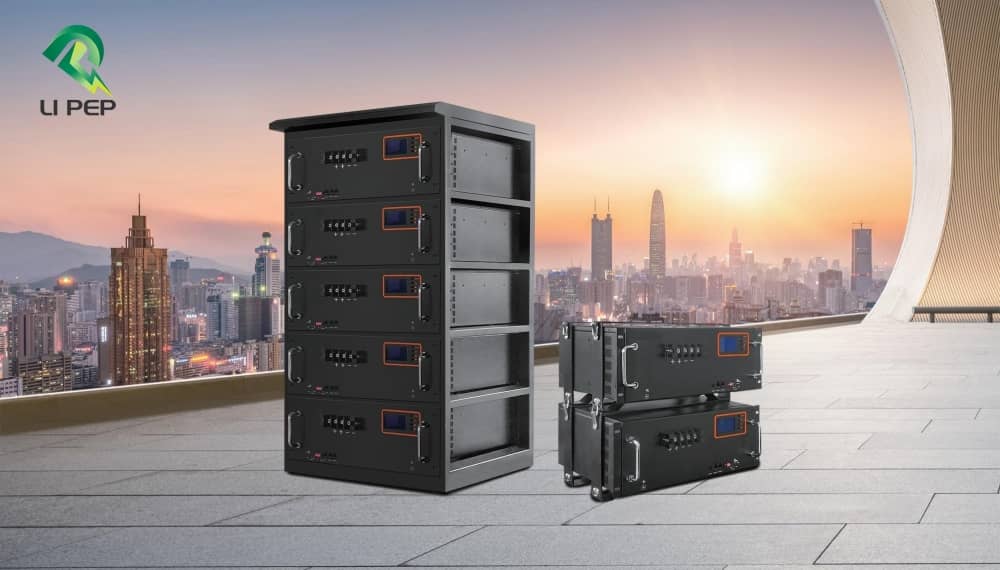
2.The Technology Bridge: How to Achieve Both
How do manufacturers bridge this gap without creating a fire hazard? It comes down to three engineering choices:
2.1. LFP Chemistry: The Non-Negotiable Base
Lithium Iron Phosphate (LFP) is no longer just a buzzword. Unlike NMC (Nickel Manganese Cobalt) which has a thermal runaway threshold around 200°C, LFP withstands temperatures up to 270°C before decomposition.
– Price Impact: LFP uses iron and phosphate, which are abundant and cheap compared to cobalt (which has volatile pricing).
– Safety Impact: The olivine structure of LFP is chemically more stable.
2.2. Intelligent BMS (Beyond Simple Monitoring)
A cheap BMS simply balances voltage. A high-safety, yet cost-effective BMS utilizes Predictive Analytics.
– Old method: Cut off when temperature > 60°C.
– New method: Detect internal resistance changes 30 minutes before a cell imbalance occurs, automatically throttling charge/discharge rates to prevent heat buildup.
2.3. Modular, Passive Cooling
Traditional active cooling (fans, liquid cooling) adds cost, complexity, and points of failure. New modular designs use aluminum extrusion heat sinks that double as structural enclosures. This reduces manufacturing costs by 15-20% while eliminating the risk of coolant leaks or fan failures.
3.Localized Case Study: A German Logistics Hub
To bring this to life, let’s look at a recent implementation. A logistics company in Hamburg, Germany, needed a 200kWh storage system to charge their electric forklift fleet.
The Solution:
We utilized a modular stackable system with the following specs:
– Cells: Grade A LFP prismatic cells sourced from a Tier 1 supplier.
– BMS: Multi-layer protection with independent over-current relays per module.
The Result:
– Cost: Achieved 25% under budget.
– Safety: The modular design allowed the units to be distributed along the wall, eliminating the need for the 3-meter exclusion zone, saving the client €8,000 in civil works.
Verdict: By choosing modularity and certified LFP, the client avoided “cheap” pitfalls without sacrificing fire safety.
4.Information Graphic: LFP vs. NMC–The 5-Point Safety & Cost Comparison
Infographic Title: The Real Cost of Battery Chemistry
| Feature | LFP (Lithium Iron Phosphate) – The New Standard | NMC (Nickel Manganese Cobalt) – The Legacy Choice |
|---|---|---|
| Cycle Life | 4,000 – 6,000 cycles (High ROI) | 2,000 – 3,000 cycles (Shorter lifespan) |
| Thermal Runaway | >270°C (Very stable) | >200°C (Risk increases with age) |
| Material Cost | Low (Iron & Phosphate, abundant) | High (Cobalt pricing is volatile & ethical concerns) |
| BMS Complexity | Moderate (Simpler chemistry) | High (Requires advanced thermal management) |
| Total Cost of Ownership | €0.08 – €0.12 per kWh over lifetime | €0.15 – €0.20 per kWh over lifetime |
Key Takeaway: LFP provides the “low price” at purchase and the “high safety” during operation.
5.The “Ultimate Guide” Section: 3 Steps to Audit Your Next Purchase
If you are currently sourcing batteries for a project, follow this 3-step checklist to ensure you are getting the balance of low price and high safety.
Step 1: Demand the “Safety Stack”
Don’t just look at the battery cell. Ask for details on the three safety layers:
- Cell: LFP only (avoid cobalt unless absolutely necessary for high-density requirements).
- Module: Does it have independent fusing? If one module fails, the rest should isolate automatically.
- System: Is there a fire suppression interface (e.g., a dry contact to trigger external fire alarms)?
Step 2: Calculate Total Cost of Ownership (TCO), Not Just Upfront Price
A system priced at $180/kWh with a 3-year warranty is actually more expensive than a system priced at $220/kWh with a 10-year warranty if you factor in replacement costs and downtime. Use this formula:
> True Cost = (Purchase Price) / (Warranty Years×Usable Capacity)
Step 3: Local Support & Compliance
In the EU and North America, liability is a major hidden cost. A battery without CE (or UKCA) and local insurance company approval (e.g., VdS in Germany) can void your business insurance. Localization tip: Ensure your supplier has a local service partner. If you are in a cold climate, ask about heating functionality—cheap batteries often omit this, causing charging failure in winter.
People Also Ask
To capture featured snippets, we have structured dedicated Q&A sections that directly answer common queries.
Q1: Is it safe to install lithium batteries in a small office?
A: Yes, provided the battery pack has UL1973 or IEC62619 certification. For small offices, look for units with IP55 or higher rating to prevent dust ingress, and ensure the BMS has over-temperature protection that triggers at the cell level, not just the pack level. Avoid “DIY” kits with generic BMS boards.
Q2: How can I verify if a “cheap” battery uses Grade A or Grade B cells?
A: Ask for the cell manufacturing traceability report. Grade A cells come with a unique QR code per cell tracing back to the production date and batch. Grade B cells (rejects) often have the QR code ground off or covered. Additionally, a warranty that covers 70% capacity retention after 5 years is usually only offered by manufacturers using Grade A cells.
Q3: What is the lifespan of a cost-effective lithium battery?
A: A well-managed LFP battery with a passive cooling system typically lasts 8 to 10 years in a commercial setting (one cycle per day). The key is the Depth of Discharge (DoD) . A high-safety BMS will limit DoD to 90% to prolong life, whereas cheap systems allow 100% discharge, drastically reducing cycle life.
Conclusion: The Market is Maturing
The era of choosing between burning your budget or burning your building is over. The convergence of LFP standardization, smart modular BMS designs, and automated manufacturing has created a new category of batteries that offer both low upfront costs and high operational safety.
For small and medium-sized enterprises looking to install or upgrade their energy storage, the winning strategy is no longer about finding the cheapest quote, but about verifying the engineering quality behind the price.
LIPEP ‘s Commitment and Value
Safety Certification: All products have passed top international safety certifications such as UL9540, IEC62619, and UN38.3.
Warranty Period: 10 years
Intelligent Energy Management System: Manages power distribution and automatically selects the most cost-effective operating strategy.
Seamless Scalability: Start with a 10 kWh system and easily expand capacity in the future by adding battery modules without replacing the inverter.
Take Action Now
Our professional engineers are ready to provide consulting services and help you take the first step toward energy independence.
Send Your inquiry
We will get in touch in 2 business day.
LIPEP SERVICES
Customised Service
LIPEP has a wealth of experience and our technical team can provide you with a customised energy storage and solar system tailored to your needs.
Stable & Quick Supply
We have in-depth cooperation with manufacturers and can provide you with quality products quickly.
After-sales Service
We patiently listen to customers' needs and provide one-stop service from consultation, design to implementation and after-sales service.