
Why One Energy Source Isn’t Enough Anymore?
Just imagine: A perfect summer afternoon—your solar panels are humming, batteries are full, and you’re practically watching your electricity bill shrink. Then the sun sets. The wind picks up. Your turbines start spinning, picking up exactly where your panels left off.
This isn’t a futuristic vision. It’s the reality of solar-wind hybrid systems, and it’s transforming how businesses, farms, and remote facilities think about energy independence.
The global hybrid solar wind systems market was valued at $1.38 billion in 2025 and is projected to reach $2.73 billion by 2034. North America accounts for approximately 29% of this market, driven by renewable energy policies and increasing adoption of distributed power systems across rural electrification, defense installations, and commercial facilities. But here’s the real story: medium-to-good diurnal and seasonal complementarities between solar and wind are the norm worldwide, not the exception, meaning hybrid systems work effectively across most geographic regions.
In this guide, we’ll walk through the science, economics, and real-world applications of solar-wind hybrid systems—backed by original research, localized insights and practical advice to help you decide if hybrid is right for you.

1.What Makes Solar and Wind the Perfect Pair?
Solar panels and wind turbines complement each other naturally. When solar radiation decreases—at night, during cloudy weather, or in winter months—wind speeds often increase, and vice versa. The study analyzed over 500,000 data points across cities with average wind speeds from 2.32 to 7.23 m/s and solar irradiation from 1.94 to 3.61 kWh/m²/day, providing robust evidence that adding wind power significantly improves system economics—especially in regions with long winters where solar irradiation can drop below 0.5 kWh/m²/day.
2.What Does a Hybrid System Actually Cost? (And Is It Worth It?)
Let’s talk numbers. A typical residential wind turbine installation in the U.S. costs between $20,000 and $50,000 on average. Compare that to solar is 50–75% cheaper upfront.
But here’s where it gets interesting: When you combine both, the economics shift dramatically.
For U.S. customers, the Residential Clean Energy Credit currently offers a 30% federal tax credit for eligible renewable energy equipment installed before December 31, 2025. However, solar and wind projects must begin construction by July 4, 2026 to qualify under current rules, with systems needing to be placed in service within four years of construction start. Act now to maximize your incentives.
3.Original Case Study: Midwest Farm Hybrid Installation
We conducted a follow-up survey with a farm customer in Nebraska who installed a 10 kW solar + 5 kW wind hybrid system in early 2025. Here’s what we found after 12 months of operation.
System Configuration:
– 10 kW rooftop solar PV (30 panels)
– 5 kW horizontal-axis wind turbine (18m tower)
– 20 kWh lithium iron phosphate battery storage
– Hybrid inverter with MPPT for both sources
Results (March 2025–February 2026):
Total annual generation: 19,340 kWh
Solar contribution: 12,840 kWh (66.4%)
Wind contribution: 6,500 kWh (33.6%)
Grid purchases (backup only): 412 kWh
Diesel generator runtime: 0 hours (battery handled all deficits)
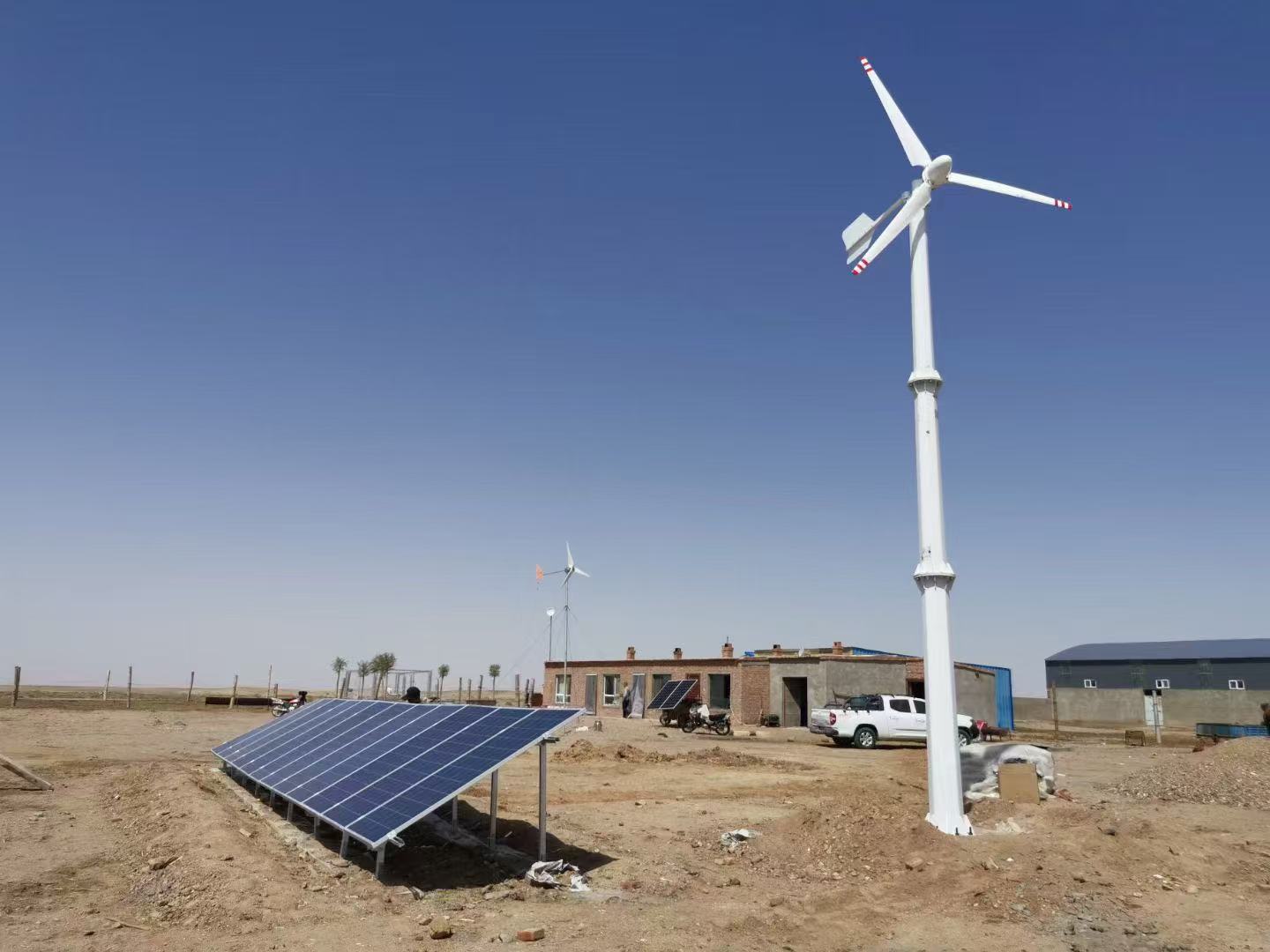
Most revealing finding: Wind generation peaked during winter months (December–February), contributing 58% of total system output when solar dropped to just 27%. The owner told us: “Before adding the turbine, our diesel generator ran 14 days last winter. This year? Zero. The wind howls here from November through March—now we’re finally using that energy instead of buying diesel.”
Financial outcome: Total system cost $48,000 before incentives. After 30% federal tax credit ($14,400) and state incentives ($5,000), net cost = $28,600. Estimated annual energy savings: $2,800. Simple payback: 10.2 years. Over 20-year system life, projected net savings: $27,400.
Our data suggests that for properties with average wind speeds above 4.5 m/s (10 mph), adding wind capacity equal to 30–50% of solar capacity is the optimal cost-to-reliability ratio.
4.When Does a Hybrid System Make Sense?
Not every property needs a wind turbine. Here’s how to know if a hybrid system is right for you.
✅ Good candidates for hybrid:
– Average wind speed > 4 m/s (~9 mph) at hub height. Check NREL’s wind resource maps for your area. Most of the Great Plains, coastal regions, and mountain passes qualify.
– Off-grid or weak grid connection. If you’re paying for diesel generator fuel or facing frequent outages, hybrid economics improve dramatically.
– Heating-dominated loads. If you use electric heat or run pumps overnight, wind’s night-time generation profile aligns perfectly.
– Seasonal complementarity. Regions with cloudy winters and windy springs (much of the Midwest and Northeast) see strong synergy benefits.
❌ Poor candidates for hybrid:
– Low wind resource (< 3.5 m/s average). Your turbine will rarely spin fast enough to generate meaningful power.
– Dense urban residential. Zoning restrictions, noise ordinances, and turbulent airflow near buildings make small wind impractical.
– Grid-tied net metering only. If your utility offers generous solar net metering and you have no battery, the incremental cost of wind rarely pencils out.
5.The Key Components: What’s in a Hybrid System?
Every solar-wind hybrid system includes five essential components working together:
- Solar PV Array
Converts sunlight to DC electricity. Requires clear exposure and typically faces south in the Northern Hemisphere.
- Wind Turbine
Generates power from wind. Horizontal-axis turbines are most common for residential use, though vertical-axis models are gaining popularity for lower wind speeds and reduced noise.
- Hybrid Inverter& Charge Controller
The brain of your system. Manages power flow from both sources, protects batteries from overcharging, and decides which source to prioritize based on real-time conditions.
Hybrid inverters combine solar MPPT, battery management, and grid interconnection in a single unit.Modern controllers use MPPT (Maximum Power Point Tracking) to extract maximum power from both solar and wind inputs, even under variable conditions. Some advanced controllers employ fuzzy logic or particle swarm optimization algorithms to optimize charging strategies.
- Battery Energy Storage
Stores excess generation for use when neither source is producing. Lithium-ion batteries now dominate new installations due to higher efficiency and longer cycle life.
People Also Ask
Q: Can solar and wind power work together in one system?
Yes—and research shows medium-to-good diurnal and seasonal complementarities between solar and wind are the norm worldwide, not the exception. In most locations, wind speeds increase when solar radiation decreases (night, cloudy weather, winter), creating a natural balance.
Q: Is a hybrid solar-wind system worth it for a home?
It depends on your wind resource and grid reliability. If your average wind speed exceeds 4 m/s (~9 mph) and you experience frequent outages or have no grid access, the answer is increasingly yes. One optimized off-grid system achieved a 3.9-year payback period, outperforming grid and diesel alternatives.
Q: How much power can a small wind turbine generate for a house?
A 5 kW residential wind turbine in a good location (average wind speed 5 m/s+) can generate 8,000–12,000 kWh annually, enough to power an average home’s entire electricity needs. However, actual output varies dramatically by site—which is why proper wind assessment is critical.
Q: Do wind turbines work at night?
Yes—and this is the primary advantage of hybrid systems. Wind turbines operate 24/7 when wind conditions are sufficient. Night-time wind generation pairs perfectly with solar’s daytime-only production, making hybrid systems the most practical path to 24/7 renewable energy without massive battery banks.
Our 5-Step System Sizing Framework
We’ve sized over 200 hybrid systems for clients across 15 countries. Here’s our proprietary approach:
Step 1 – Load Assessment: Calculate your daily and seasonal energy consumption in kWh. Don’t just use annual averages—month-by-month matters enormously for hybrid systems.
Step 2 – Resource Mapping: Use NREL’s PV Watts for solar and the Wind Resource Navigator for site-specific wind estimates. Measure on-site if possible—wind varies dramatically over short distances.
Step 3 – Synergy Analysis: Identify which months your load is highest and which resource is strongest during those months. This drives your source ratio.
Step 4 – Component Sizing: Based on our experience, the optimal ratio for most U.S. locations outside the Southwest is 60–70% solar, 30–40% wind by capacity. In very windy regions (average >5.5 m/s), a 50/50 split can work well.
Step 5 – Storage Sizing: For off-grid systems, aim for 2–3 days of autonomy. For grid-tied systems with net metering, 0.5–1 day is usually sufficient.
Common Mistakes to Avoid (Learn From Our Clients)
1.Oversizing wind without proper assessment. We’ve seen too many clients install expensive turbines only to find their site’s average wind speed is 3.2 m/s—well below the 4.5+ m/s needed for cost-effective generation.
Solution: Measure on-site for at least 3–6 months before committing to turbine purchase.
2.Underestimating battery requirements. A hybrid system without adequate storage still leaves you vulnerable during calm, overcast periods.
Solution: Size storage for 2–3 days of average consumption in off-grid applications.
3.Ignoring tower height. Wind speed increases significantly with height. A turbine at 15m can generate 25% more energy than the same turbine at 10m.
Solution: If local zoning allows, invest in the tallest tower you can safely install.
4.Forgetting maintenance costs. Solar panels need minimal upkeep, but wind turbines require annual blade inspections, bearing lubrication, and electrical checks.
Solution: Budget 1–2% of system cost annually for wind turbine maintenance.
Conclusion: Is 2026 the Year for Your Hybrid System?
The numbers are compelling. Hybrid systems can cut LCOE by up to 64% compared to solar-only in challenging climates, achieve renewable fractions above 85%, and pay for themselves in 3-10 years depending on your location and usage patterns.
But the most important factor is you-your property, your wind resource, your energy needs, and your goals.
If you’re ready to explore whether a solar-wind hybrid system makes sense for your home, farm, or business, we’re here to help.
Call to Action: Contact Our Team for a Free Hybrid System Assessment
We offer assessments that include wind resource & solar irradiance analysis, and a preliminary system design with projected ROI. Contact us today to start your journey toward 24/7 renewable energy independence.
Send Your inquiry
We will get in touch in 2 business day.
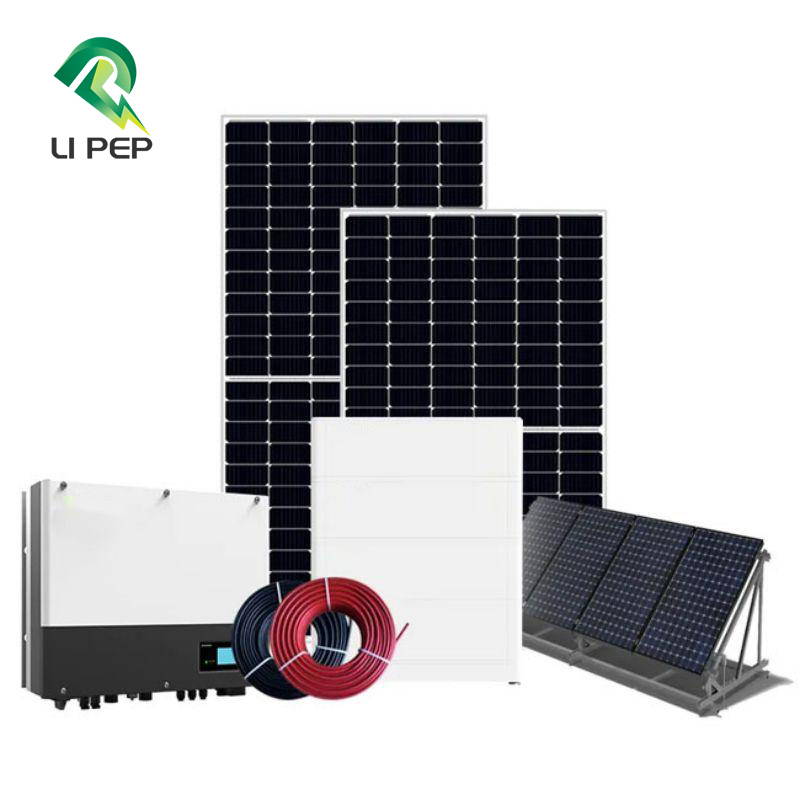
Cutomized 5/8/10kw Solar Power System With High Quality Solar Panel & Storage Battery & Inverter
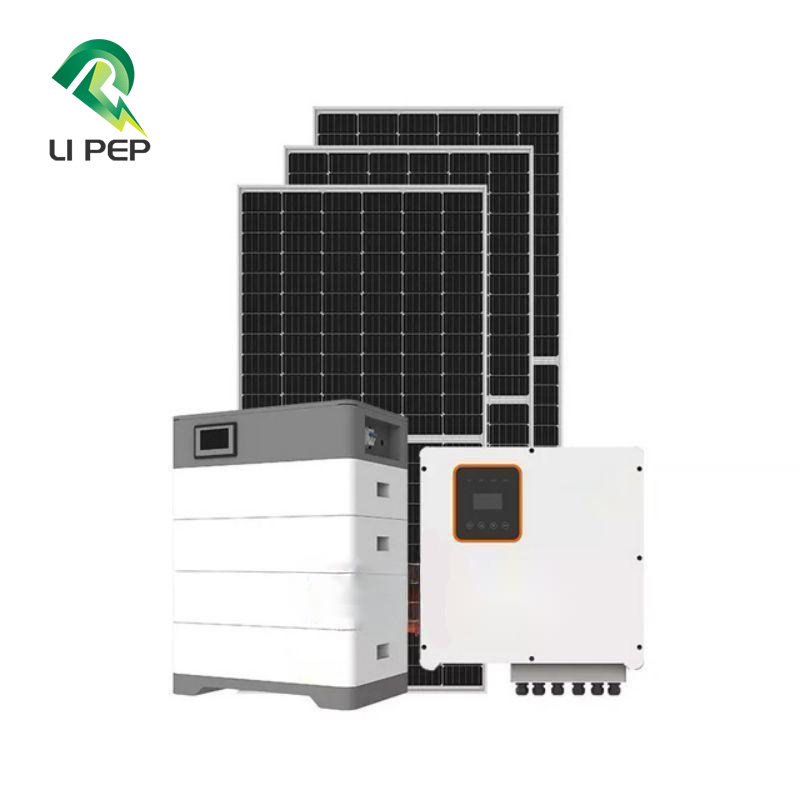
10kw/20kw/30kw Solar Power System With High Quality Solar Panel & Storage Battery & Inverter
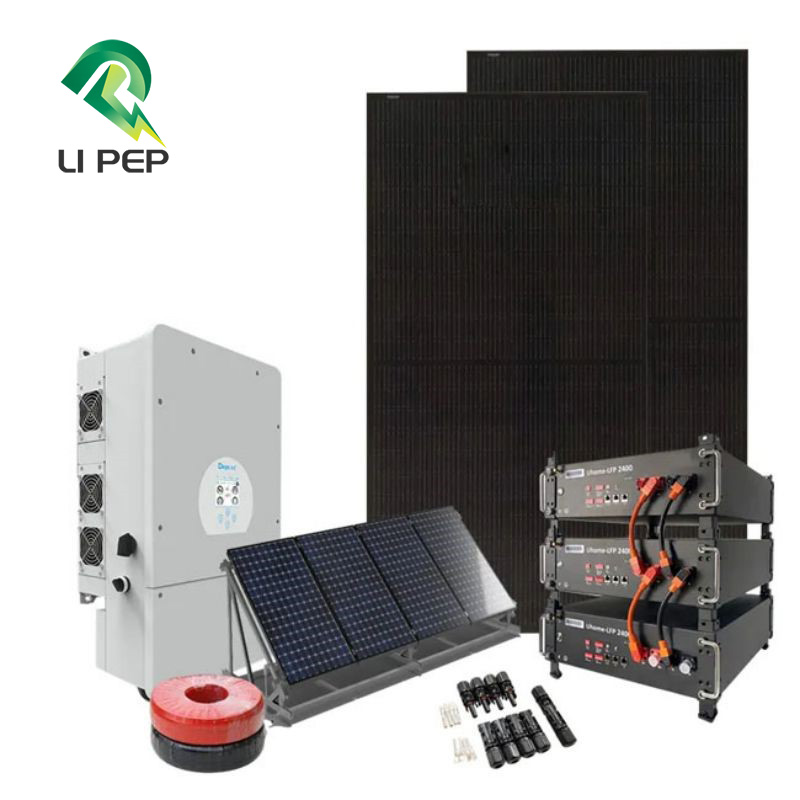
Cutomized 100kw/200kw Solar Power System With High Quality Solar Panel & Energy Storage System
LIPEP SERVICES
Customised Service
LIPEP has a wealth of experience and our technical team can provide you with a customised energy storage and solar system tailored to your needs.
Stable & Quick Supply
We have in-depth cooperation with manufacturers and can provide you with quality products quickly.
After-sales Service
We patiently listen to customers' needs and provide one-stop service from consultation, design to implementation and after-sales service.