
Introduction: The Diesel-Only Equation Is Breaking
If you manage energy for a remote island, an Arctic settlement, or a camp beyond the grid, the arithmetic of diesel has become impossible to defend on a spreadsheet. IRENA’s island energy work puts diesel generation costs on islands at 40 cents per kWh or more once shipping is factored in. The IEA has noted that electricity on isolated islands can run 3 to 10 times higher than mainland grids, driven primarily by fuel logistics. And the pain is not only price: a single delayed fuel shipment can mean rationing power for a week.
This is the context in which wind-solar hybrid systems have moved from “pilot project” to “default planning assumption” for remote electrification. The shift is not ideological. It is a response to a specific set of failure modes in diesel-only systems: fuel price volatility, logistical fragility, low-load generator wear, and the growing difficulty of financing assets with unhedgeable operating costs.
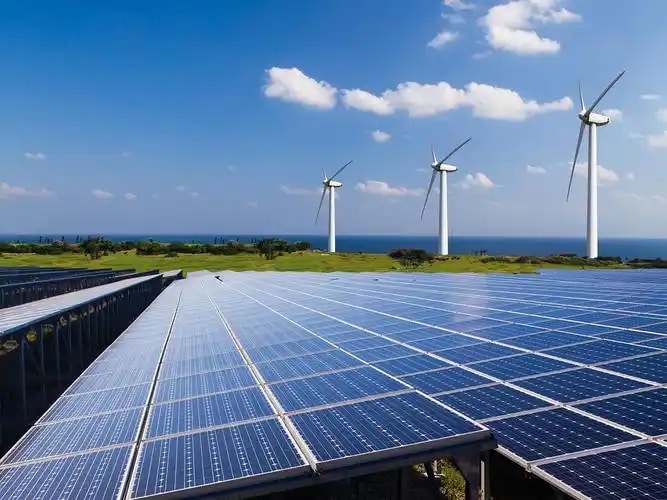
1: What "Hybrid" Actually Buys You in a Remote Microgrid
A wind-solar hybrid system in a remote context is not simply “solar plus wind plus batteries.” It is a generation portfolio designed around complementarity: wind often produces at night and during winter frontal passages when solar is weak or absent, while solar carries the daytime load and charges the battery for evening peaks. Studies of PV-wind-battery microgrids show that this complementary generation pattern can reduce outage duration from 9.04 hours per day to 2.17 hours per day compared with a single-resource baseline — a 76% reduction.
That reliability gain is the first economic mechanism. The second is diesel displacement. A well-designed hybrid system can cut diesel consumption by 40–70%, depending on the solar and wind resource.
The third mechanism is generator protection. Diesel gensets running at low load or cycling on/off to follow variable demand wear out faster; hybrid systems use battery storage as a “shock absorber,” allowing the generator to run at a more efficient, stable set point or stay off entirely for longer windows.
2: What the Data Actually Shows
Remote microgrid LCOE numbers vary widely because they are highly sensitive to diesel price, discount rate, resource quality, and whether social/environmental costs are monetized. But the range tells a consistent story: well-optimized hybrid systems are landing in the same cost territory as, or below, diesel-only benchmarks in high-cost remote settings.
The insight for decision-makers: LCOE is not a single number to compare across projects. It is a design output. The same resource can produce a $0.10/kWh system or a $0.46/kWh system depending on reliability targets, renewable penetration goals, and whether the optimization respects operational constraints like generator minimum loading and battery limits.
3: Localized Evidence — What the Arctic and Island Cases Reveal
The strongest argument for hybrid systems in remote areas comes not from global averages but from specific communities where the system has already been built and measured. Three Arctic cases illustrate different pathways and different lessons.
Kotzebue, Alaska generates roughly 20% of its electricity from wind and solar, saving an average of 3,400 t CO₂ annually over the last five years. The project benefited from Alaska’s Renewable Energy Fund and a phased approach that built local expertise in a community of about 3,000 residents.
Colville Lake, Northwest Territories — a settlement of roughly 150 people — deployed a solar-battery-diesel hybrid that avoids approximately 215 t CO₂ per year and displaces 80,000 litres of diesel annually.
These cases share a pattern that is easy to miss in high-level LCOE comparisons: the operational and social value of reduced outages and reduced fuel-logistics exposure often outweighs the pure per-kWh cost difference in communities where reliability is not a luxury but a precondition for health services, water treatment, and winter survival.
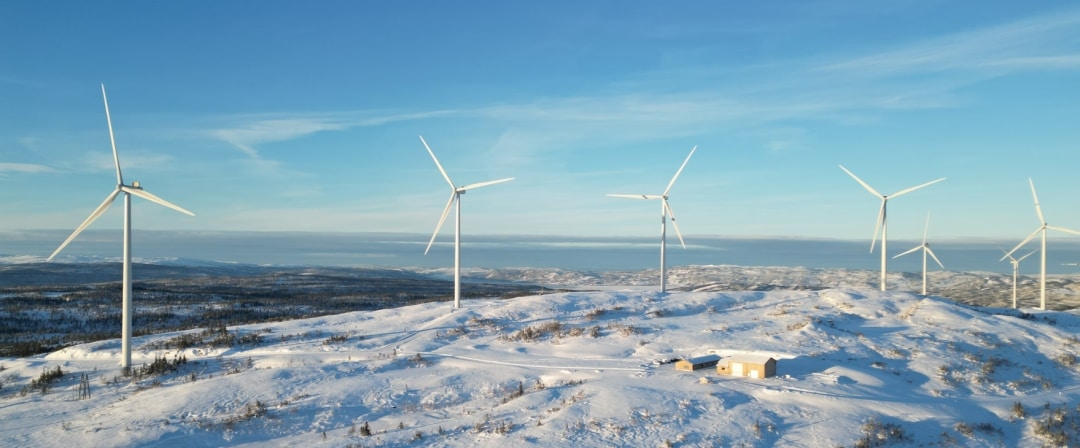
4: The Technical Layer — What Separates a Workable Hybrid from a Fragile One
In a remote microgrid, the power conversion and control layer is where hybrid systems succeed or fail. The generator is no longer the sole voltage/frequency reference; the inverter and battery must be able to form the grid, absorb load steps, and manage the diesel generator as a controllable asset rather than a baseload source.
Three technical parameters deserve disproportionate attention during specification:
- Off-grid overload capability. Modern three-phase hybrid inverters for remote applications are often specified with 160% off-grid overload capacity for 10 seconds and 110% continuous AC overload, which determines whether the system can start motors and ride through transient loads without dropping the microgrid. In a wind-solar hybrid, the inverter must also coordinate with the wind controller’s power curve and the battery’s state of charge.
- Protection and environmental rating. Remote sites are not climate-controlled electrical rooms. IP66 protection, Type II SPD on both DC and AC sides, and active arc-fault protection (AFCI) are the difference between a system that survives a humid coastal season or a dust-laden mining site.
- Generator integration and smart-load control. The hybrid controller must decide, moment to moment, whether renewable power serves the load, charges the battery, or curtails; and whether the diesel generator runs, stays off, or operates at a minimum stable load. Systems that support DG input and smart load control can enforce generator minimum loading while using the battery to fill the gap – a direct lever for reducing low-load wear and fuel consumption.
5: ROI Logic and the Next Steps for Project Developers
The ROI of a remote hybrid system is not captured by a single LCOE line. It is built from four stacked cash-flow effects:
– Fuel displacement: 40–70% reduction in diesel consumption, with the exact figure determined by resource quality, battery size, and generator dispatch strategy.
– Generator maintenance avoidance: fewer running hours and fewer low-load cycles translate directly into longer overhaul intervals and lower spare-parts logistics costs.
– Outage and resilience value: reduced outage duration has an economic value in communities and industrial sites that is often omitted from LCOE but appears in the operating budget as avoided emergency fuel, avoided lost production, or avoided social service disruption.
A practical next-step framework for EPCs and developers:
- Start with the load-step profile, not the annual kWh. A remote microgrid’s hardest requirement is often the largest transient, not the daily energy total. Size the inverter/controller overload capability against motor-start and cloud-transient events first.
- Model the generator as a controllable asset. The hybrid controller’s dispatch logic should enforce minimum generator loading and use the battery to absorb the difference. If the controller cannot do this, the diesel savings in the model will not materialize in operation.
- Stress-test the LCOE against diesel price and discount rate. Sensitivity analyses in Sub-Saharan Africa and Arctic studies consistently identify fuel price and financial discount rate as the most influential parameters. A hybrid that looks marginal at $1/litre diesel can be strongly positive at $1.50–$2/litre.
- Treat modularity as a risk-management feature. Remote load growth is uncertain. A modular BESS and expandable power conversion architecture allows capacity to follow demand without re-engineering the entire microgrid.
If you are evaluating a specific remote site, the most useful first step is a load-and-resource screening: 8,760-hour load data (or a validated synthetic profile), on-site wind and solar resource data, and a diesel logistics cost breakdown. That screening is what turns a generic “hybrid is cheaper” claim into a defensible project economics case.
The Hybrid Decision Is a Risk-reduction Decision
For remote areas, the wind-solar hybrid system is a risk-reduction decision: reducing exposure to fuel logistics, reducing generator wear, reducing outage duration, and reducing the financing uncertainty that comes with unhedgeable diesel price volatility.
The projects that succeed are the ones where the hybrid is designed as a system — with the inverter, controller, battery, and generator specified against the actual load and resource profile — rather than assembled as a collection of components with optimistic nameplate assumptions. That is the difference between an LCOE that looks good in a proposal and a microgrid that stays on through the next fuel shipment delay.
Ready to find the right solar+storage solution for your home or business? Contact LIPEP team for a free consultation and customized system design.
Send Your inquiry
We will get in touch in 2 business day.
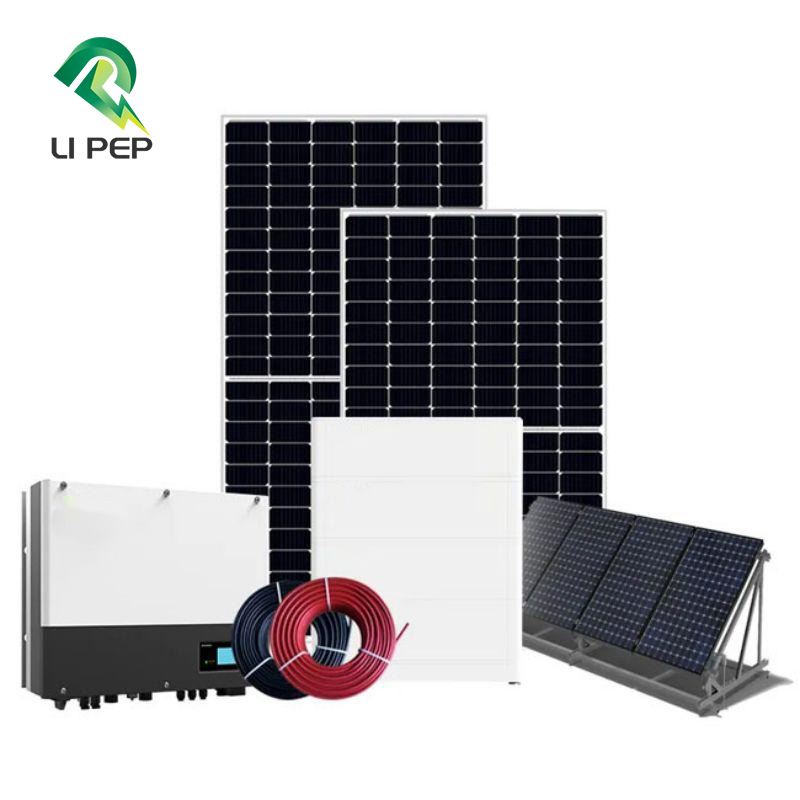
Cutomized 5/8/10kw Solar Power System With High Quality Solar Panel & Storage Battery & Inverter
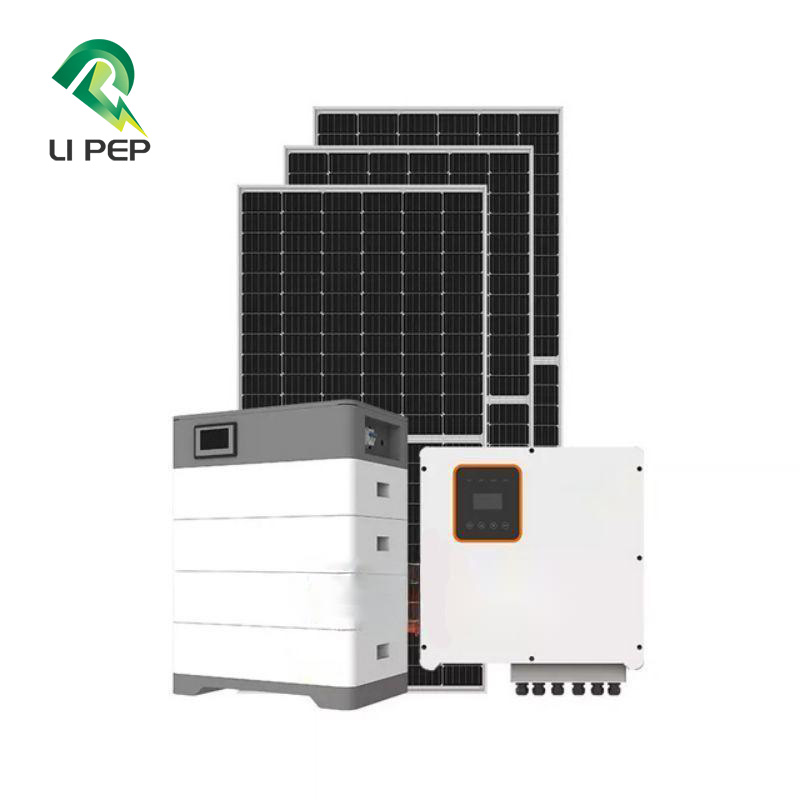
10kw/20kw/30kw Solar Power System With High Quality Solar Panel & Storage Battery & Inverter
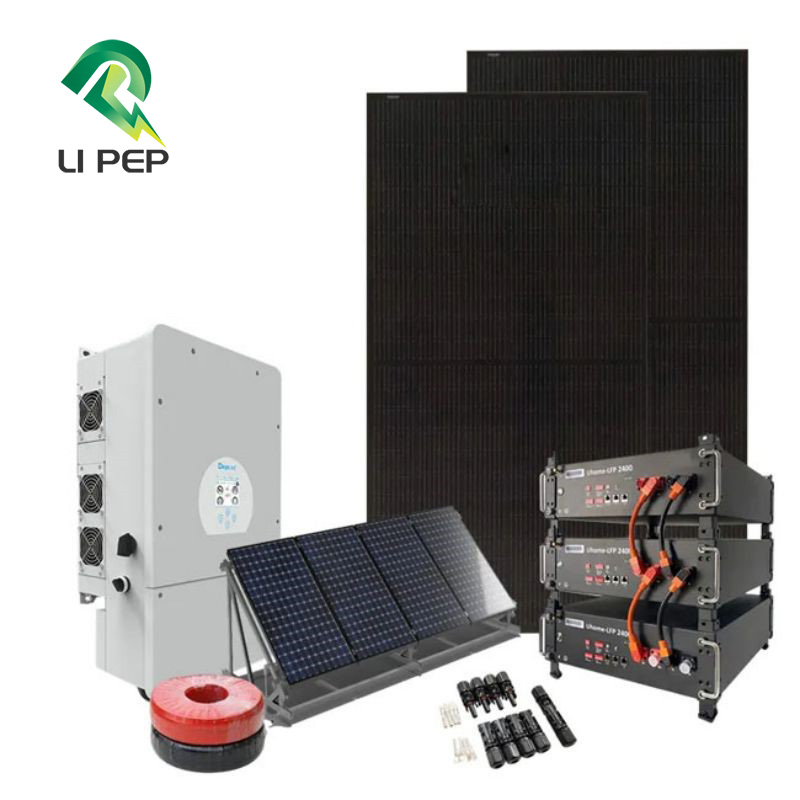
Cutomized 100kw/200kw Solar Power System With High Quality Solar Panel & Energy Storage System
LIPEP SERVICES
Customised Service
LIPEP has a wealth of experience and our technical team can provide you with a customised energy storage and solar system tailored to your needs.
Stable & Quick Supply
We have in-depth cooperation with manufacturers and can provide you with quality products quickly.
After-sales Service
We patiently listen to customers' needs and provide one-stop service from consultation, design to implementation and after-sales service.