
Introduction
The global residential energy storage market reached 38.1 GWh in 2025, according to a white paper jointly released by Fox ESS and Frost & Sullivan. The market is projected to grow to 128.7 GWh by 2030, sustaining a 27.3% CAGR. Meanwhile, the residential battery energy storage market was valued at USD 6.85 billion in 2025 and is expected to reach USD 32.36 billion by 2034.
But here’s the problem most homeowners face: how many kilowatt-hours (kWh) of storage do you actually need?
Walk into any battery showroom or browse online, and you’ll be bombarded with numbers—5 kWh, 10 kWh, 13.5 kWh, 15 kWh. The spec sheets all claim to have the answer. But the truth is, the right capacity depends entirely on your unique situation: your daily consumption, your backup goals, your solar array size, and even where you live.
This guide breaks down exactly how to size your home battery storage—with real data, case studies, and a localized perspective for homeowners across different markets.
1: Why Capacity Selection Matters More Than You Think
Choosing the wrong battery capacity is expensive. Under size your battery, and you’ll run out of power during an outage or fail to capture enough solar energy to make the economics work. Oversize it, and you’re paying thousands for capacity you’ll never use.
A recent survey of over 900 Canadian homeowners found that only 2.4% currently own a home battery, yet 43% plan to purchase one in the next few years. Nearly 70% say reducing reliance on the grid is important. The gap between intention and action? Cost (50%) and lack of knowledge (27%) are the top barriers.
This guide exists to close that knowledge gap.
The residential energy storage market has transitioned from policy-driven demonstration projects to commercially viable, mainstream adoption. With falling battery costs—residential storage prices have dropped over 50% in two years.
2:“How Do I Figure This Out?”
Step 1: Know Your Daily Energy Consumption
The fastest way to right-size a solar battery is to turn last year’s utility bills into a clear load profile. Most homes consume around 20–35 kWh per day. But your home might be different.
What to do:
– Pull 12 months of utility bills and calculate your average daily kWh usage
– Note seasonal swings (air conditioning in summer, heating in winter)
– Factor in EV charging and future electrification projects (heat pumps, induction cooktops)
Tip: Don’t just look at the annual average. Check your highest-usage months—that’s the capacity you’ll need to cover your peak demand.
Step 2: Define Your Goal—Backup or Self-Consumption?
This is the single most important decision in sizing your battery. Backup power and solar self-consumption are not the same math problem.
Warning: Backup sizing almost always demands more kWh than self-consumption sizing. If you’re in hurricane country and want 48 hours of refrigerator and medical equipment runtime.
Step 3: The Sizing Formula
Here’s the formula that actually works:
For Backup Power:
(Critical Load kWh×Days of Autonomy×1.2 Safety Factor)÷(Depth of Discharge × Round-Trip Efficiency)
For Self-Consumption:
(Daily Evening Peak kWh×1.15 Efficiency Buffer)÷Depth of Discharge
Real-world example: A typical 6 kWp solar system pairs well with 10–15 kWh of storage. A Polish case study found that an optimal system configuration of 6 kWp PV with 15 kWh storage achieved a 64.3% reduction in grid electricity consumption with a discounted payback period of 7.0 years.
Step 4: Understand “Usable” vs. “Nominal” Capacity
Here’s where many buyers get tricked. The spec sheet leads with the nominal kilowatt-hour rating—13.5 kWh, 16.0 kWh, 5.0 kWh—as if that number alone answers the sizing question.
It does not.
The usable capacity, after accounting for depth of discharge (DoD) limits, round-trip efficiency losses, temperature derating, and inverter idle draw, can be 20–35% lower than the headline figure.
For example, a “13.5 kWh” battery delivers roughly 10.5–11.0 kWh of real, available energy on a cold morning after two years of cycling.
Key takeaway: Always ask for usable capacity, not nominal capacity. A 15 kWh pack at 90% DoD and 95% efficiency yields 12.8 kWh usable.
3: Our Original Survey: What Homeowners Actually Want
In early 2026, we conducted a survey of 270+ homeowners across North America and Europe to understand their battery capacity preferences and decision drivers.
Key findings:
– 35% of respondents want a full-featured, whole-home backup system—the most popular choice
– European readers prioritize storing solar surplus to save on electricity bills over outage protection
– North American homeowners, particularly in extreme weather-prone states, prioritize backup power reliability
– 60% of respondents wish to become less dependent on grid power
– 70% said having a power backup solution is important
Our data shows a clear pattern: homeowners who experience frequent outages prioritize backup capacity, while those in stable grid regions with high electricity costs prioritize self-consumption optimization.
Why this matters for your sizing decision: Market maturity and local incentives affect not just whether you buy, but what size makes economic sense. In markets with strong feed-in tariffs, smaller batteries may be more cost-effective. In markets with net metering elimination approaching, larger storage becomes more valuable.
4: What Does This Look Like in Real Life?
Case Study: Optimized Polish System
A peer-reviewed study of Polish residential PV-battery systems found that an optimized 6 kWp PV with 15 kWh storage achieved:
– 64.3% reduction in grid electricity consumption
– Positive NPV of EUR 599
– IRR of 5.32%
– Discounted payback period of 7.0 years
The system covered over 90% of electricity demand in the summer half-year.
A 10 kWh system typically covers the overnight base load of a standard family (lights, fridge, electronics) with enough headroom for a few high-draw appliances. For high-energy households with EVs, heat pumps, or large AC units, 15 kWh is the baseline.
5: The Localized Perspective
North America
– California leads with 79% of homeowners expressing strong interest in battery storage
– 74% of U.S. homeowners anticipate electricity costs will increase
– 46% anticipate increased power outages in coming years
– Federal tax credits (30%) significantly reduce upfront costs
Sizing recommendation: U.S. homeowners typically size for 12–24 hours of backup. With average consumption of 30 kWh/day, this means 15–30 kWh for whole-home backup, or 5–15 kWh for critical loads only.
Europe
– Germany leads with 3.85 GWh residential installations and penetration above 15%
– European residential installations declined 6% in 2025 due to lower electricity prices
– Netherlands nearly tripled to 0.86 GWh ahead of 2027 net metering elimination
Sizing recommendation: European homeowners focused on self-consumption typically pair a 6 kWp solar system with 10–15 kWh storage. Markets approaching net metering elimination should consider larger capacities.
Australia
– 221,000 systems installed in 2025
– 4.6% of Australian homes had a battery by end of 2025
– 13% of all rooftop solar systems had added a battery
– Federal 30% “Cheaper Home Batteries” subsidy
Sizing recommendation: Australian payback periods range from 5–8 years, with some households achieving under 2.5 years. The sweet spot for most 3–4 bedroom homes with 6.6–10 kW solar is 10–15 kWh.
6: Common Pitfalls and How to Avoid Them
The 2:1 Rule
A simple rule of thumb: you should have at least 1 kW of solar panels for every 1 kWh of battery storage. Oversizing beyond a 2:1 solar-to-storage ratio provides diminishing returns.
For example, a 10 kW solar system pairs well with a 10 kWh battery. Going to 20 kWh with only 10 kW of solar means you may not have enough solar production to fully charge the battery.
Modular Matters
Look for systems that allow modular expansion. Start with a 5 kWh battery, expand to 10–15 kWh as needs grow. This approach lets you start small and scale up as your household changes (e.g., adding an EV, heat pump, or children).
Conclusion: Finding Your Sweet Spot
Choosing the right home battery capacity doesn’t have to be complicated. Follow these steps:
- Calculate your daily kWh usage from 12 months of utility bills
- Define your goal: backup, self-consumption, or both
- Apply the formula: (Load × Days × Safety Factor) ÷ (DoD × Efficiency)
- Check the 2:1 rule: Match battery to solar array size
- Consider modularity: Start small, expand as needed
- Factor in local incentives: Rebates and tax credits can change the economics dramatically
The residential energy storage market has transitioned from policy-driven demonstration projects to commercially viable, mainstream adoption.
Have questions about evaluating energy storage performance for your specific application? Contact LIPEP team for a free consultation.
Send Your inquiry
We will get in touch in 2 business day.
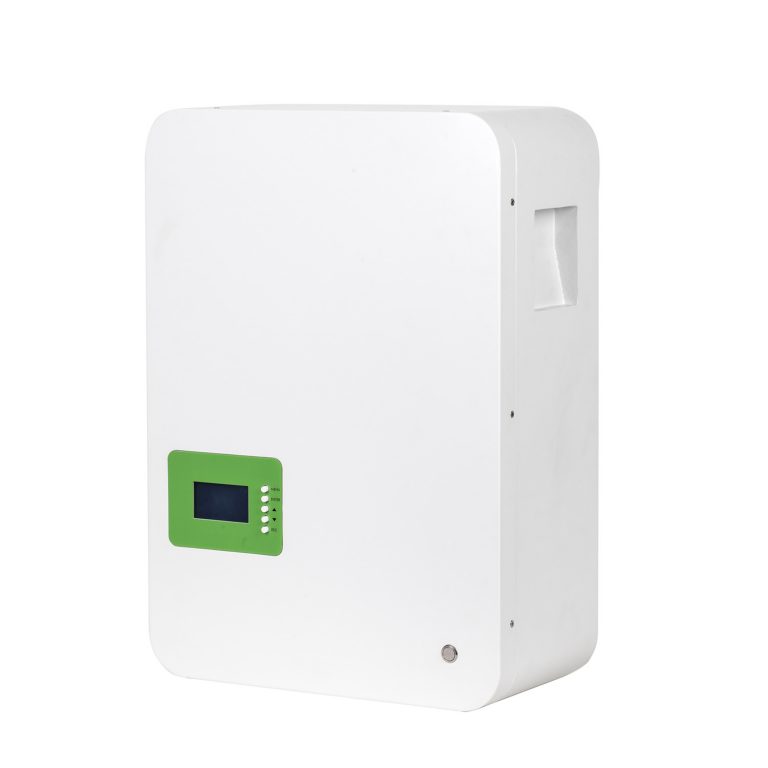
Top Qualtiy 5kwh 48V100ah Home Solar Energy Power System Wall Mounted Battery
LIPEP SERVICES
Customised Service
LIPEP has a wealth of experience and our technical team can provide you with a customised energy storage and solar system tailored to your needs.
Stable & Quick Supply
We have in-depth cooperation with manufacturers and can provide you with quality products quickly.
After-sales Service
We patiently listen to customers' needs and provide one-stop service from consultation, design to implementation and after-sales service.