
The solar industry has reached an inflection point. In 2025, the EU installed a record 27.1 GWh of new battery storage capacity – a 45% year-over-year increase. Spain saw behind-the-meter storage grow 65%, with 61% of new residential solar installations now including batteries. The U.S. residential solar storage attachment rate hit 45% in Q1 2026, up from 38% a year earlier.
But here’s the question every business and homeowner asks: If I’ve already installed solar panels, do I really need a battery?
The short answer is: It depends – on your energy usage patterns, local electricity rates, grid reliability, and available incentives. This article breaks down everything you need to know to make an informed decision.
1: The "I Just Want to Save Money" Perspective
The Case for Solar-Only
If your primary goal is minimizing upfront costs and you’re in a region with favorable net metering, solar-only might be the right choice.
Why solar-only works:
– Lower initial investment – panels only, no battery
– Net metering allows you to “bank” excess daytime generation
The hidden cost: Without storage, you’re relying on the grid at night and during peak evening hours when electricity is most expensive. Your solar panels are idle when the sun goes down, and any excess daytime generation is sold back at wholesale rates – often a fraction of what you pay to buy it back.
Data: Research on Polish households shows that solar-only systems achieve a self-consumption rate of only 22–28%. That means 72–78% of the solar energy you generate is exported to the grid – and you’re buying power back at retail rates.
The Case for Adding Storage
A battery transforms your solar system from a daytime-only generator into a 24/7 energy asset.
Self-consumption jumps from 22–28% to 56–83% with a properly sized battery
Time-shift your solar energy to evening peak hours when electricity is most expensive
One study found that adding battery storage nearly doubles self-consumption (from 32.0% to 68.7%) and reduces grid imports by 38%
An optimized 8 kWp PV system with a 6 kWh battery achieves 58% self-consumption. Seasonal analysis shows self-consumption can reach 90% in summer with 8 kWh storage, compared to just 18% in winter without storage.
2: The "What's the ROI?" Perspective
Global Payback Comparisons
Australia – The most battery-friendly market:
– Average payback: 7.3 years with federal rebates
– NSW households in Virtual Power Plants (VPPs): as low as 4 years
– VPP participation combined with government incentives can reduce payback by up to five years and improve annual bill savings by approximately 20%
Europe:
– Poland: 9.0 years with financial support, 11.8 years without
– Germany: optimal PV-BESS system estimated at 7 kWp PV + 7 kWh battery
– The UK’s Smart Export Guarantee (SEG) pays up to 20–30p per kWh during peak periods for battery-equipped systems
3: The "I Want Energy Independence" Perspective
Backup Power and Grid Resilience
If your region experiences frequent outages or you simply want peace of mind, a battery is non-negotiable.
What a battery gives you:
– Uninterrupted power during grid outages
– Protection against rising and volatile electricity prices
– Resilience – recent large-scale grid failures across Europe highlight the growing importance of household-level backup
Context: The EU must scale battery storage to around 750 GWh by 2030 to meet its energy flexibility needs – a tenfold increase from 2025 levels. This isn’t just about economics; it’s about grid stability.
4: The "We're a Small Business" Perspective
Commercial & Industrial Considerations
For small to medium businesses, the economics of solar+storage are often more compelling than for homeowners – because businesses typically consume more energy during peak daytime hours.
Key advantages for SMBs:
– Peak demand charge reduction – batteries can shave demand peaks, lowering capacity charges
– Time-of-use arbitrage – charge during low-rate periods, discharge during high-rate periods
– Business continuity – keep operations running during outages
> Case Example: A 50–200 kWh commercial system can achieve payback in 5–8 years when paired with solar and used to offset peak demand. Industrial park projects in China have achieved payback as low as 4.41 years with IRRs exceeding 20%.
5: Our Own Analysis: The "Hidden Factors" Most People Miss
Factor 1: Seasonal Mismatch
One of the most overlooked factors in PV-BESS economics is seasonal variation. Research shows that batteries are most beneficial in summer but underutilized in winter. A two-week summer vacation – when household demand drops during peak solar production.
What this means for you: Size your battery for year-round needs, not just summer peak production. Don’t over-invest in capacity you’ll only use three months of the year.
Factor 2: The 80/20 Rule of Self-Consumption
Our analysis of multiple market studies reveals a consistent pattern: the first 5–8 kWh of storage delivers the biggest ROI. Beyond that, diminishing returns set in.
Recommendation: For most small & medium commercial applications, 6–8 kWh of storage per 6–8 kWp of solar offers the optimal balance of cost and performance.
Factor 3: Virtual Power Plants (VPPs)
VPP participation is emerging as a game-changer. In Australia:
– VPPs can reduce payback periods by up to five years
– South Australia sees first-year ROI of 17.5% (5.7-year payback) with subsidy + VPP
– Combined PV-storage ROI can reach 13.5% (7.4-year payback)
The opportunity: If your market offers VPP programs, you’re not just saving money – you’re earning money by providing grid services.
Decision Framework: Should You Add Storage?
Answer These 5 Questions:
1.What’s your evening electricity usage?
If you use significant power after sunset, a battery lets you use your own solar energy instead of buying from the grid.
2.What’s your export rate vs. import rate?
If you sell at 4p/kWh and buy at 25p/kWh (common in the UK), every kWh you store and use yourself saves 21p. That’s powerful math.
3.Does your region have time-of-use (TOU) pricing?
If electricity is cheaper at night and expensive during peak hours, a battery lets you arbitrage the difference.
4.How reliable is your grid?
If outages are common, a battery provides backup power that solar-only cannot.
5.What incentives are available?
With ITC (30%), Italian tax credits (50%), or Australian rebates, the economics shift dramatically.
Final Verdict
Solar-only is the right choice if:
– You have generous net metering
– Your electricity rates are flat (no time-of-use pricing)
– You’re on a tight budget and need the shortest payback
– Outages are rare in your area
Solar + Battery Storage is the right choice if:
– You use significant energy in the evening
– Your export rates are low compared to import rates
– You want backup power during outages
– You’re a business with peak demand charges
– VPP programs are available in your region
– You want to maximize your self-consumption and energy independence
The trend is clear: Battery storage is becoming an essential component of solar systems worldwide. With falling battery prices ($50/kWh for LFP cells), improving incentives, and the rise of VPP programs, the economics are increasingly compelling.
The question isn’t really “Do I need a battery?” It’s “When should I add a battery – and how big should it be?”
Ready to find the right solar+storage solution for your home or business? Contact LIPEP team for a free consultation and customized system design.
Send Your inquiry
We will get in touch in 2 business day.
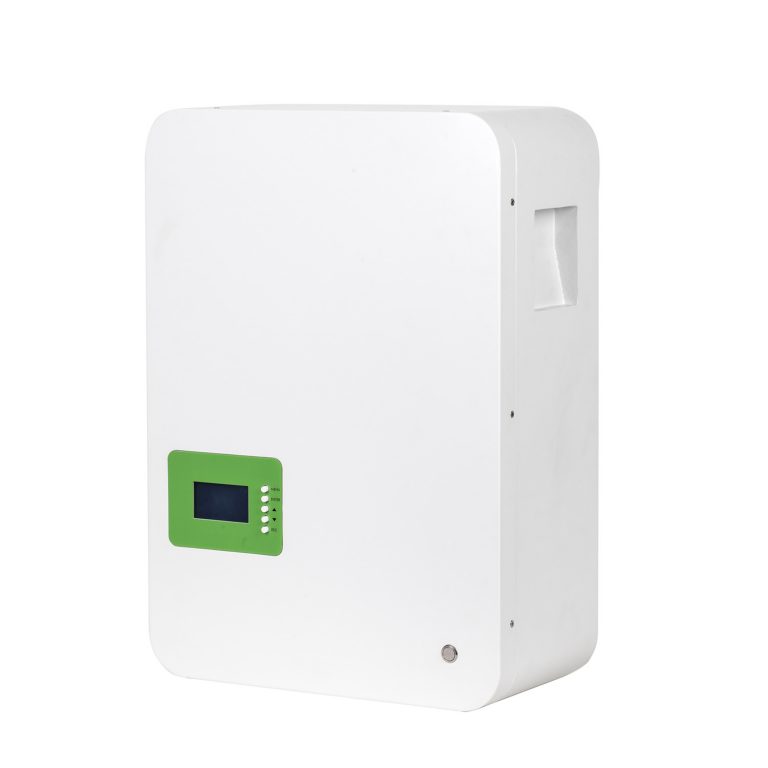
Top Qualtiy 5kwh 48V100ah Home Solar Energy Power System Wall Mounted Battery
LIPEP SERVICES
Customised Service
LIPEP has a wealth of experience and our technical team can provide you with a customised energy storage and solar system tailored to your needs.
Stable & Quick Supply
We have in-depth cooperation with manufacturers and can provide you with quality products quickly.
After-sales Service
We patiently listen to customers' needs and provide one-stop service from consultation, design to implementation and after-sales service.