
A note on scope:
This is not a product page dressed as a blog post. It is built around three things we keep hearing from commercial site owners and EPC partners — “Will the numbers actually work on my site?”, “What does the charger do to my demand charge?”, and “What do I do first?” The case data below is pulled from documented projects across Australia, Europe, the UK, and China so you can benchmark your own site against something real.
Why “PV + storage + EV charging” became one decision, not three
Three curves have crossed at the same time.
First, EV charging demand is no longer a rounding error. Global public charging capacity per electric light-duty vehicle rose from 4 kW to 4.5 kW between 2024 and 2025, and the average charging speed worldwide climbed 15%, from just over 40 kW to nearly 50 kW. Fast chargers gained 30% in stock and made up 60% of the global charger fleet in 2025. For a commercial site, this means the charging load is becoming large enough to reshape the entire electricity bill — not just add a line item.
Second, the economics of commercial solar-plus-storage have compressed into a zone where site owners can act. In European and US commercial markets, a 1 MW / 2 MWh LFP storage system co-located with 2–3 MW of rooftop or carport PV carries a simple payback of 4–8 years and an unlevered IRR of 11–18% once incentives and revenue stacking are applied. In markets with dynamic tariffs, the numbers tighten further: a 100 kW PV + 200 kWh storage system in Germany shows a 4.2-year financial payback, with arbitrage contributing 58% of revenue. Solar Power Europe expects European commercial storage to add 3.6 GWh in 2025, with IRR above 15% and payback as short as 3–4 years.
Third, site owners have stopped asking for “solar” and started asking for “resilience plus revenue.” A supermarket does not want a PV array; it wants lower demand charges and a reason for EV drivers to spend 40 minutes in the store. An industrial park does not want a battery; it wants the lights to stay on and the charging bays to keep billing during a grid event. A gas station does not want a canopy; it wants the fuel margin of the future without waiting for the utility interconnection queue.
That is the shift this article is about: PV-storage-charging is no longer a “green flagship” — it is becoming the minimum viable energy architecture for three site types that sit at the intersection of high footfall, high parking dwell time, and high grid-connection friction.
1.Supermarkets and retail sites: charging as a footfall engine, not a cost centre
What the site actually needs
A supermarket car park is one of the most under-monetised pieces of real estate in commercial energy. The UK alone has over 9,000 supermarket sites and 1,200+ retail parks, averaging 250–700 parking spaces each. The dwell time is almost perfectly matched to fast charging: 40–60 minutes is enough to take an EV from a low state of charge to 80%, which is roughly the time a shopper spends in the store.
The operational insight here is not “add chargers.” It is “add chargers without creating a demand-charge spike that erases the margin.” That is where storage stops being optional.
The documented case: Coles’ first fully electric supermarket (Australia)
Coles and Origin opened a fully electric supermarket at Orana Village in Clyde, Melbourne, built around a 270 kW rooftop PV system (487 panels) and a 110 kW / 225 kWh battery energy storage system (BESS). The BESS is sized not only for solar shifting but for peak-demand management and backup power — it reserves capacity to keep lighting and payment systems running as an alternative to a diesel generator.
On the charging side, the store hosts up to 200 kW DC fast charging across four parking bays, integrated with the BESS specifically to manage peak electricity demand. This is the architecture that matters: the charger is not bolted onto the building supply as an afterthought; it is within the storage’s control boundary.
The portfolio data is equally instructive. Across the first phase of the Coles–Origin partnership, solar was installed across 73 stores and distribution centres — 16.45 MW of rooftop PV and 1.35 MWh of battery storage across five stores — with participating sites expected to reduce annual grid electricity consumption by almost 20% on average. The next phase targets an additional 15 MW of rooftop solar across up to 75 stores and 15 MWh of battery storage across up to 20 stores.
What this means for your site
The supermarket case is not a template to copy; it is a sizing discipline. The Coles site did not size the battery to the PV array — it sized the battery to the peak demand profile created by the charger plus refrigeration plus HVAC. If your site has a 300 kW peak and a 200 kW charger, a battery sized only for solar self-consumption will underperform. The BESS in a retail PV-storage-charging system should be specified against the combined load shape, not the generation curve.
Where product capability enters the conversation: an EMS that can prioritise charging power dynamically — capping charger output when the store’s refrigeration load spikes, then releasing stored solar once the peak passes — is the difference between a charger that increases your demand charge and one that lowers it. That is an architecture question, not a brand question. Ask any integrator how their EMS arbitrates between EV load and site load.
2.Industrial parks: resilience is the product; arbitrage is the bonus
The operational reality
Industrial parks carry a different load shape from retail. The daytime load is high and relatively flat, which is good for solar self-consumption but leaves little headroom for EV charging without a grid upgrade. And grid upgrades in industrial zones are slow and expensive. The park’s energy problem is therefore not “how do I go green” — it is “how do I add charging capacity without waiting for a new transformer, and how do I keep operating when the grid is constrained?”
Why this matters for park developers
The industrial-park case makes a point that is often lost in residential-oriented storage marketing: commercial storage value is not primarily in backup. Backup is the insurance layer. The primary return comes from demand-charge reduction, PV self-consumption uplift, and — increasingly — grid-service or VPP participation. In markets with dynamic tariffs, the arbitrage spread alone can carry a meaningful share of the investment case: the German 100 kW/200 kWh example shows 58% of revenue from arbitrage with a 4.2-year payback.
The sizing principle for parks is therefore different from retail: the battery should be sized against the park’s peak load minus its minimum load, with charging treated as a flexible load that can be modulated by the EMS. A park with a 5 MW peak and a 2 MW minimum has roughly 3 MW of flexible headroom — that is the number that determines how much charger capacity can be added without a utility upgrade.
Where product capability enters the conversation: VPP readiness is the filter. A storage system that cannot accept a third-party dispatch signal – or expose its state of charge and power limit to an aggregator – will become a stranded asset in markets moving toward flexibility procurement. The Jiangsu project included V2G terminals from day one for this reason. If your park is in a market with capacity markets or flexibility tenders, ask whether the EMS supports external dispatch protocols before you specify the battery.
3.Gas stations and fuel retail: the transition asset is the canopy, not the pump
The strategic question fuel retailers are actually asking
Fuel retailers are not asking whether EVs will take share. They are asking how to convert existing forecourt assets into multi-energy sites without waiting for a grid interconnection that may take 18–36 months. The canopy is the answer to the first half of that question; storage is the answer to the second.
The documented case: a solar canopy–powered fuel station in Ukraine
The COR-Energy station on the Kyiv–Chernihiv highway integrates a hybrid solar canopy of 432 panels (180 kW) with up to 500 kWh of storage. The canopy powers two high-speed charging stations capable of charging eight EVs simultaneously across CCS 2, GB/T DC, Type 2, and CHAdeMO connectors, as well as the entire site infrastructure. In spring, summer, and autumn, the station can charge EVs entirely from solar without drawing from the public grid.
This is the forecourt-specific advantage of storage: the canopy PV alone would not be dispatchable at night or on cloudy days, but the 500 kWh battery makes the charging service grid-independent for a meaningful portion of the year, which is a resilience and branding asset as much as an energy-cost asset.
The forecourt sizing logic
Gas stations have an unusual constraint: the charging load is spiky and the site’s existing supply is sized for fuel equipment, not EV fast chargers. A 180 kW canopy PV system and a 500 kWh battery, as in the COR-Energy case, are not oversized — they are sized to buffer the simultaneous charging of multiple vehicles against a grid connection that may only support a fraction of that load. The canopy also solves a land problem: forecourts rarely have spare ground for a ground-mount array, but they almost always have a canopy structure that can be replaced or overlaid with PV.
Where product capability enters the conversation: the storage in a forecourt application must handle high C-rate discharge for short, repeated fast-charging bursts, not just multi-hour solar shifting. That is a different battery specification from a supermarket BESS. Ask for the continuous and peak discharge ratings relative to the charger nameplate, not just the kWh capacity. A 500 kWh battery that can only discharge at 100 kW will bottleneck a 200 kW charger.
4.The decision frame: what to size, what to ask, what to measure
This section is for the reader who has moved past “should we?” and is now at “how do we specify it?”
A three-variable sizing frame
Across all three site types, the system sizing is driven by three numbers — and they are not the same three numbers a residential installer would use.
The insight we would underline
The three site types share a structural advantage that residential systems do not: they already have the load, the parking, and the grid connection. The integration question is not whether to add solar or storage or charging — it is which of the three should be sized first, given the site’s load shape and grid constraint. For retail, the charger often sizes the battery. For parks, the peak-minus-minimum headroom sizes the battery. For forecourts, the simultaneity of fast charging sizes the battery. Getting that sequence right is worth more than any single component’s efficiency rating.
A closing thought for the site owner reading this: the three site types in this article are not early adopters. They are the sites where the math already works — because the load is already there, the parking already exists, and the grid connection is already a bottleneck. The question is no longer whether PV-storage-charging belongs on these sites. It is which of the three loads gets sized first. Get that sequence right, and the system pays for itself. Get it wrong, and you own an expensive solar canopy with a battery that is either too small or too large for the job.
Ready to find the right solar+storage solution for your home or business? Contact LIPEP team for a free consultation and customized system design.
Send Your inquiry
We will get in touch in 2 business day.
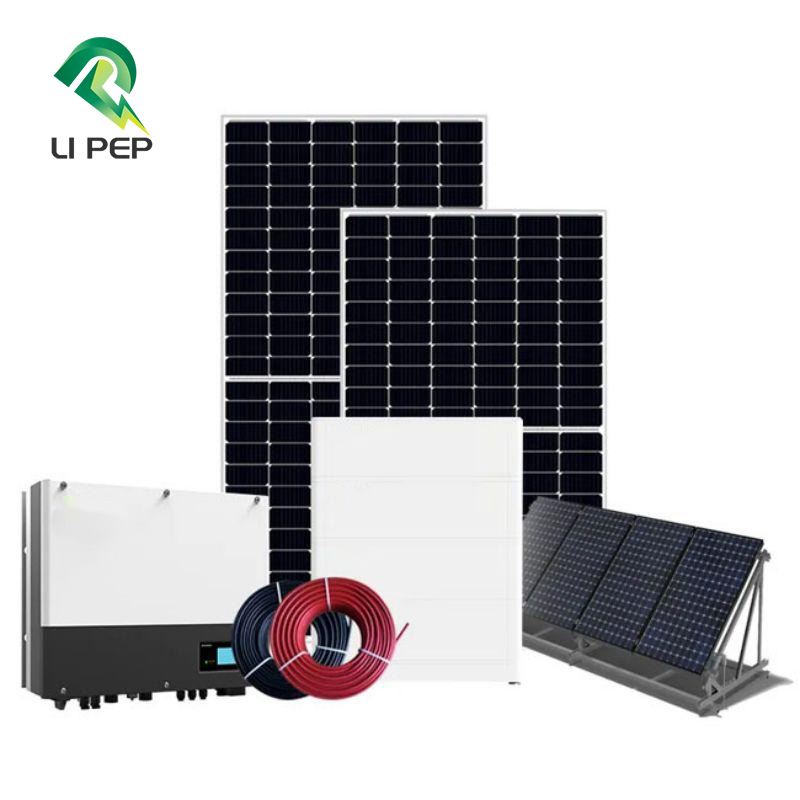
Cutomized 5/8/10kw Solar Power System With High Quality Solar Panel & Storage Battery & Inverter
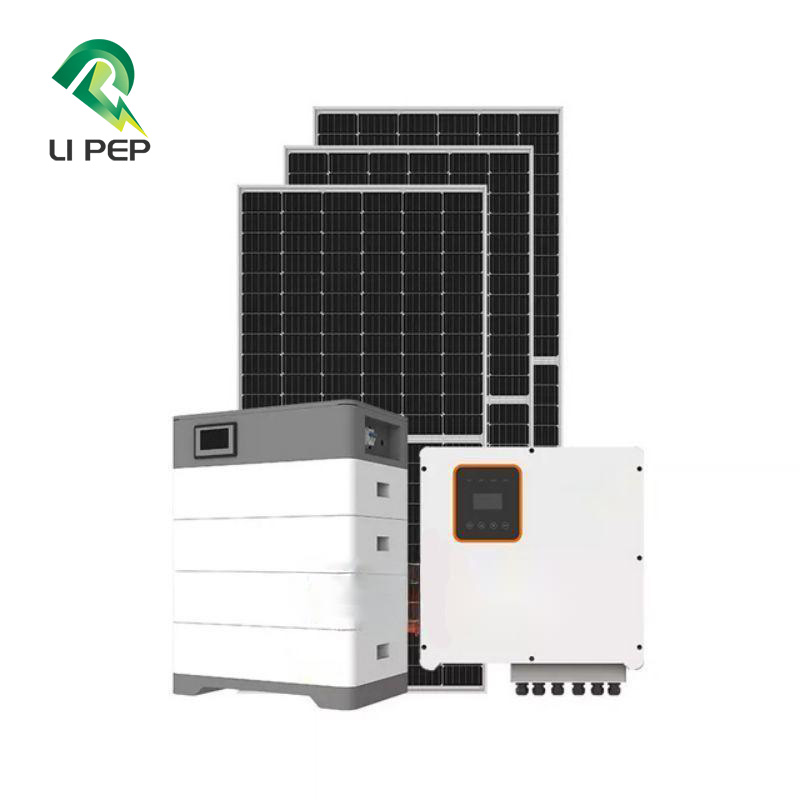
10kw/20kw/30kw Solar Power System With High Quality Solar Panel & Storage Battery & Inverter
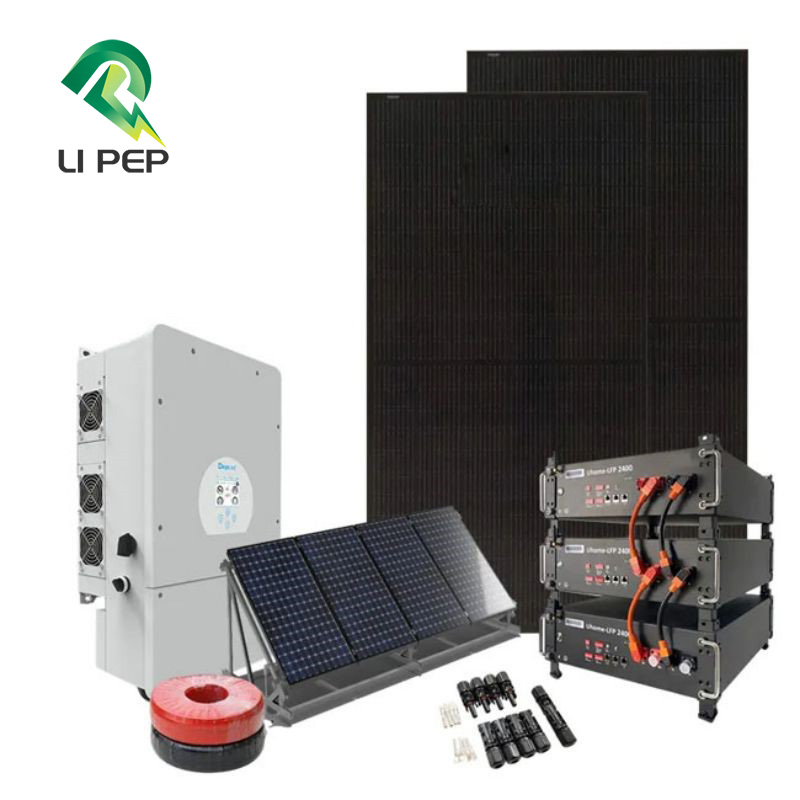
Cutomized 100kw/200kw Solar Power System With High Quality Solar Panel & Energy Storage System
LIPEP SERVICES
Customised Service
LIPEP has a wealth of experience and our technical team can provide you with a customised energy storage and solar system tailored to your needs.
Stable & Quick Supply
We have in-depth cooperation with manufacturers and can provide you with quality products quickly.
After-sales Service
We patiently listen to customers' needs and provide one-stop service from consultation, design to implementation and after-sales service.