
For years, homeowners looking to add battery storage faced a daunting decision: piece together an inverter from one brand, batteries from another, and hope everything talks to each other. That landscape is changing fast. Across North America, Europe, and Asia-Pacific, a new generation of all-in-one home energy storage systems is reshaping what residential storage looks like—and why buyers are paying attention.
By 2026, the all-in-one segment has moved decisively from niche to mainstream. The global all-in-one home energy storage market was valued at US$2.9 billion in 2025 and is expected to reach US$8.7 billion by 2032, growing at a compound annual growth rate of 17.0%.
1.Why Is the All-in-One Market Taking Off? Three Powerful Drivers
1.1 Policy Shifts Are Making Storage a Necessity
Residential solar owners who once relied on generous feed-in tariffs and net metering schemes are facing a reckoning. Across Europe, governments are pulling back support for grid exports, dramatically altering the economics of rooftop solar. Solar-only systems are losing their financial edge. Storage is no longer optional—it’s essential.
1.2 Battery Costs Have Decreased—Making All-in-One Systems More Affordable
Falling lithium-ion battery prices are a powerful tailwind for the entire storage industry. Every reduction in battery cost shrinks payback periods and expands the addressable market.
In fact, residential battery payback periods in many mature solar markets have shortened to 5–8 years. For most homeowners, that’s comfortably within ownership cycles.
The combination of falling hardware costs and rising grid instability makes 2026 the “payback tipping point” for all-in-one systems in most high-electricity-price markets.
1.3 Grid Unreliability Makes Home Backup a Valued Feature
Across North America and parts of Europe, extreme weather events and aging grid infrastructure are causing more frequent and longer power outages. Backup value—once an abstract “nice to have”—is now a concrete financial and safety consideration.
For homeowners, the ability to keep refrigerators, medical equipment, and heating/cooling systems running during an outage adds real, quantifiable value to any storage purchase.
2.What Exactly Is an All-in-One Home Energy Storage System? A Quick Primer
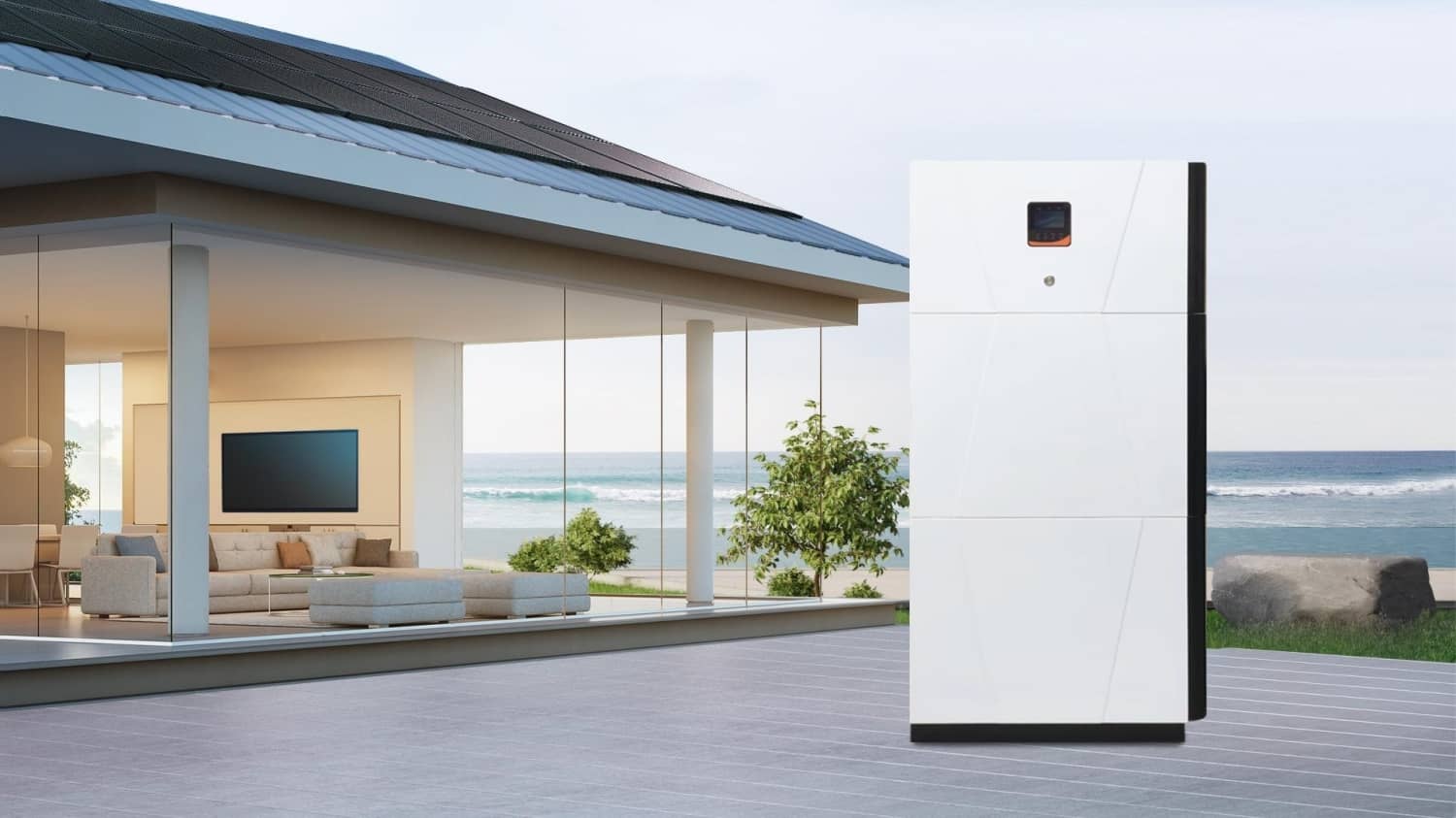
An all-in-one energy storage system integrates all essential components—the battery, inverter, Battery Management System (BMS), Energy Management System (EMS), and thermal management—into a single compact cabinet. The result: a plug-and-play appliance rather than a science project.
All-in-One vs. Split Systems: The Head-to-Head Comparison
Buyers often ask: if modular systems offer so much flexibility, why choose all-in-one? The answer lies in understanding what today’s homeowners **actually value**. Here’s the side-by-side breakdown:
Advantages of All-in-One Systems
| Aspect | All-in-One System | Modular System |
|---|---|---|
| Installation Time | Pre-wired, plug-and-play; install in hours, not days | On-site assembly; multiple components to mount and wire |
| Labor Cost | Lower—fewer on-site hours | Higher—requires technical labor for integration |
| Space Footprint | Compact, sleek, modern design | Multiple boxes take up more wall or floor space |
| System Efficiency | Higher—components co-engineered; minimal communication loss | Variable; depends on BMS protocol compatibility between brands |
| Warranty & Support | Single point of contact; one manufacturer for the whole system | Potentially fragmented; inverter from one brand, battery from another |
| User Experience | One app, one dashboard, one manual | Multiple systems to monitor separately |
Trade-Offs to Consider
No system is perfect for everyone. All-in-one solutions typically have higher initial cost per kWh due to advanced R&D and integration, and limited scalability—though many new models now offer add-on battery modules. However, for the vast majority of residential and small commercial applications, the simplicity, reliability, and aesthetic benefits of All-in-One far outweigh these limitations.
3.Why Integrators and Homeowners Are Choosing All-in-One
Beyond the checklist comparison, we hear three recurring themes from buyers:
Simplicity sells. “I don’t want to be an energy expert. I just want lower bills and backup power.” All-in-one systems deliver on both without complexity.
One throat to choke. When something goes wrong, split-system owners face the classic “Is it the inverter or the battery?” runaround. All-in-one buyers have one manufacturer, one support number, one warranty.
Future-proofing. With software updates, intelligent EMS platforms, and built-in VPP (Virtual Power Plant) readiness, many All-in-One systems are designed to become grid-interactive assets, not just static backup boxes.
4.The New Frontier: Stackable All-in-One Designs
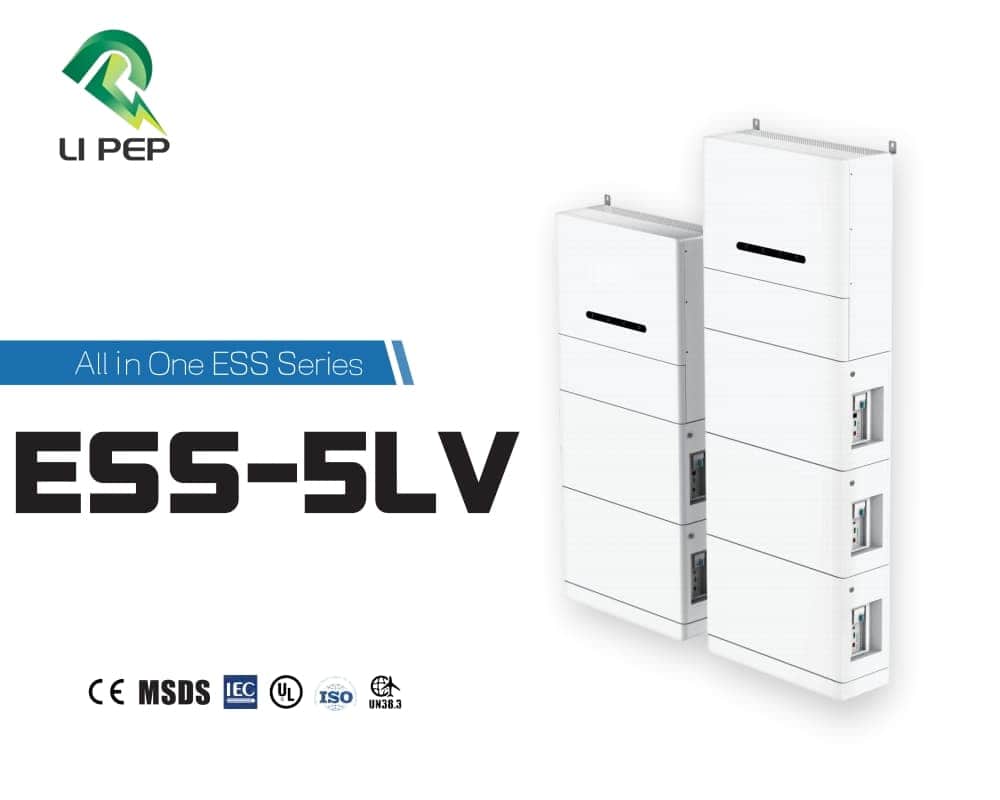
The biggest limitation of earlier All-in-One systems—lack of capacity expansion—is rapidly being solved. A new generation of stackable all-in-one systems is emerging, particularly visible at major industry exhibitions.
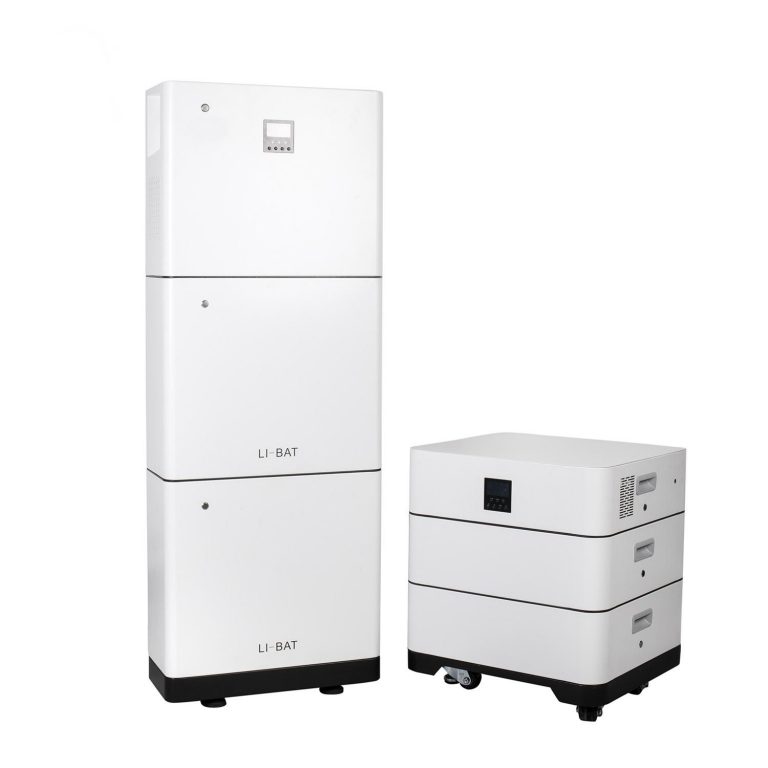
These designs combine the plug-and-play simplicity of All-in-One with modular expansion: start with a base unit that handles daily needs, then add more battery modules—often wall- or floor-stackable—as energy consumption grows (electric vehicles, heat pumps, etc.).
5.Efficiency and Safety: Where All-in-One Systems Lead the Pack
Modern all-in-one systems leverage advanced technology and integrated thermal management to achieve over 99% PCS (Power Conversion System) efficiency. System-level round-trip efficiency (RTE) for well-designed All-in-One units now routinely exceeds 90%, and in some cases reaches 95% or higher depending on inverter technology and cooling systems.
That matters because every percentage point lost to heat or conversion inefficiency is money left on the table over a 10- to 15-year system life.
Summary: The Verdict on All-in-One
Policy changes are forcing storage adoption, battery costs have finally crossed the affordability threshold, grid unreliability makes backup valuable, and homeowners overwhelmingly prefer the simplicity of a single integrated unit.
For buyers evaluating storage options: don’t dismiss all-in-one as “inflexible.” Today’s stackable, software-driven All-in-One systems offer scalability within the brand ecosystem, faster ROI through higher efficiency, and the peace of mind that comes with single-source warranty and support.
People Also Ask Quick Answers
Q: What is the difference between all-in-one and split energy storage systems?
All-in-one systems integrate the battery, inverter, BMS, and EMS into a single cabinet for plug-and-play installation. Split systems use separate components from potentially different brands, offering more flexibility but requiring professional configuration.
Q: Are all-in-one battery systems worth the cost in 2026?
Yes—in most high-electricity-price markets, payback periods have fallen to 5–8 years.
Q: Can I expand an all-in-one system later?
Many modern All-in-One systems are now stackable or modular—you can add battery modules without replacing the inverter.
Q: How long do all-in-one home batteries last?
Typical cycle life ranges from 5,500 to over 8,000 cycles, equivalent to 10–15 years of daily use depending on depth of discharge and thermal management.
Ready to Explore All-in-One Solutions?
As a specialized supplier of residential and C&I energy storage solutions, we offer a range of UL-certified, CEC-compliant, and EU-grid-code-ready all-in-one systems. Whether you’re a distributor, installer, or project developer, our team can help you match the right product to your regional requirements.
Contact us for a catalog and region-specific pricing
Send Your inquiry
We will get in touch in 2 business day.
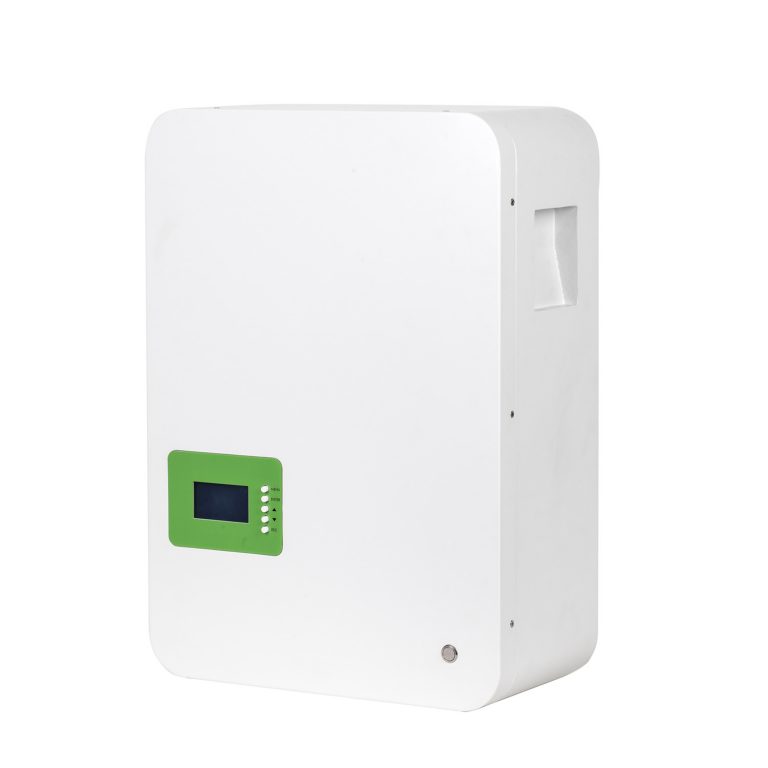
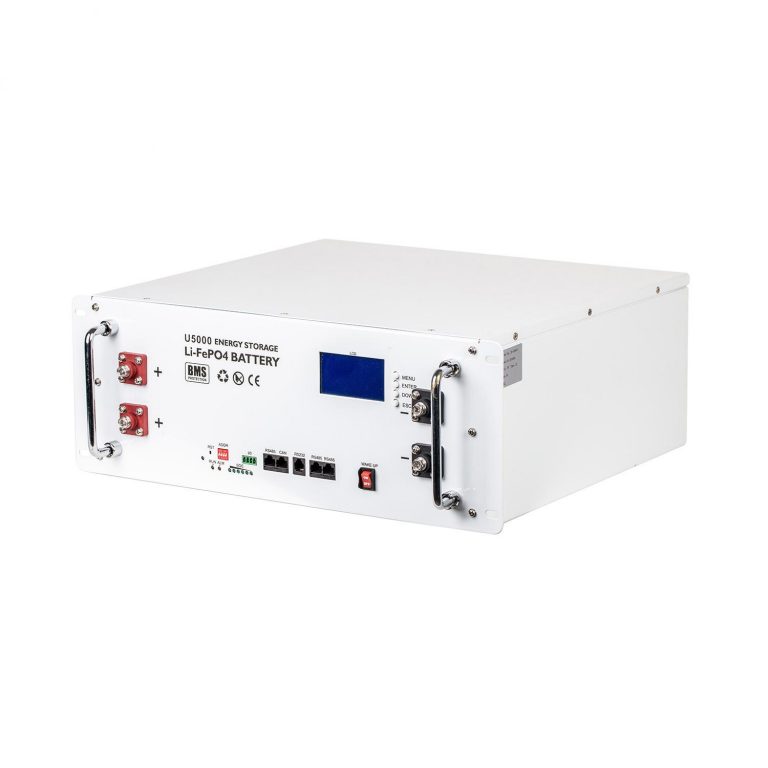
Top Qualtiy 5kwh 48V100ah Home Solar Energy Power System Wall Mounted Battery
LIPEP SERVICES
Customised Service
LIPEP has a wealth of experience and our technical team can provide you with a customised energy storage and solar system tailored to your needs.
Stable & Quick Supply
We have in-depth cooperation with manufacturers and can provide you with quality products quickly.
After-sales Service
We patiently listen to customers' needs and provide one-stop service from consultation, design to implementation and after-sales service.